
April is National Cancer Prevention and Early Detection Month. It is a time when hospitals, research institutions, and public health organizations across the country raise awareness about the cancers that are most preventable, and the steps people can take to prevent a diagnosis.
For us at Protect Environmental, this month has a specific meaning. According to the U.S. Environmental Protection Agency, radon is the leading cause of lung cancer deaths among nonsmokers in America, claiming the lives of more than 21,000 Americans each year. It is invisible, odorless, and has no symptoms until the damage is already done. Yet, exposure to radon can be prevented.
If you have never tested your home for radon, this is the right time to start.
What is radon?
Radon is a naturally occurring radioactive gas that forms when uranium in soil and rock breaks down. According to the National Cancer Institute, it seeps up through the ground and diffuses into the air, entering homes through cracks in floors, walls, or foundations, where it can collect to elevated levels indoors.
You cannot detect it without a test. There is no smell, no visible sign, no warning. Most people have no idea their home has elevated radon levels until they test.
Why radon matters for cancer prevention
According to the National Cancer Institute, scientists estimate that 15,000 to 22,000 lung cancer deaths in the United States each year are related to radon. Radon is the second leading cause of lung cancer overall, and the leading cause among people who have never smoked.
To put that into context, the Association of Community Cancer Centers reports that lung cancer claims more lives in the US each year than colon, prostate, and breast cancer combined.
Radon is not a rare or fringe risk. The American Lung Association estimates that 1 in 15 homes nationwide have radon levels above the EPA action level of 4.0 pCi/L. In some states, as many as 1 in 3 homes have elevated levels.
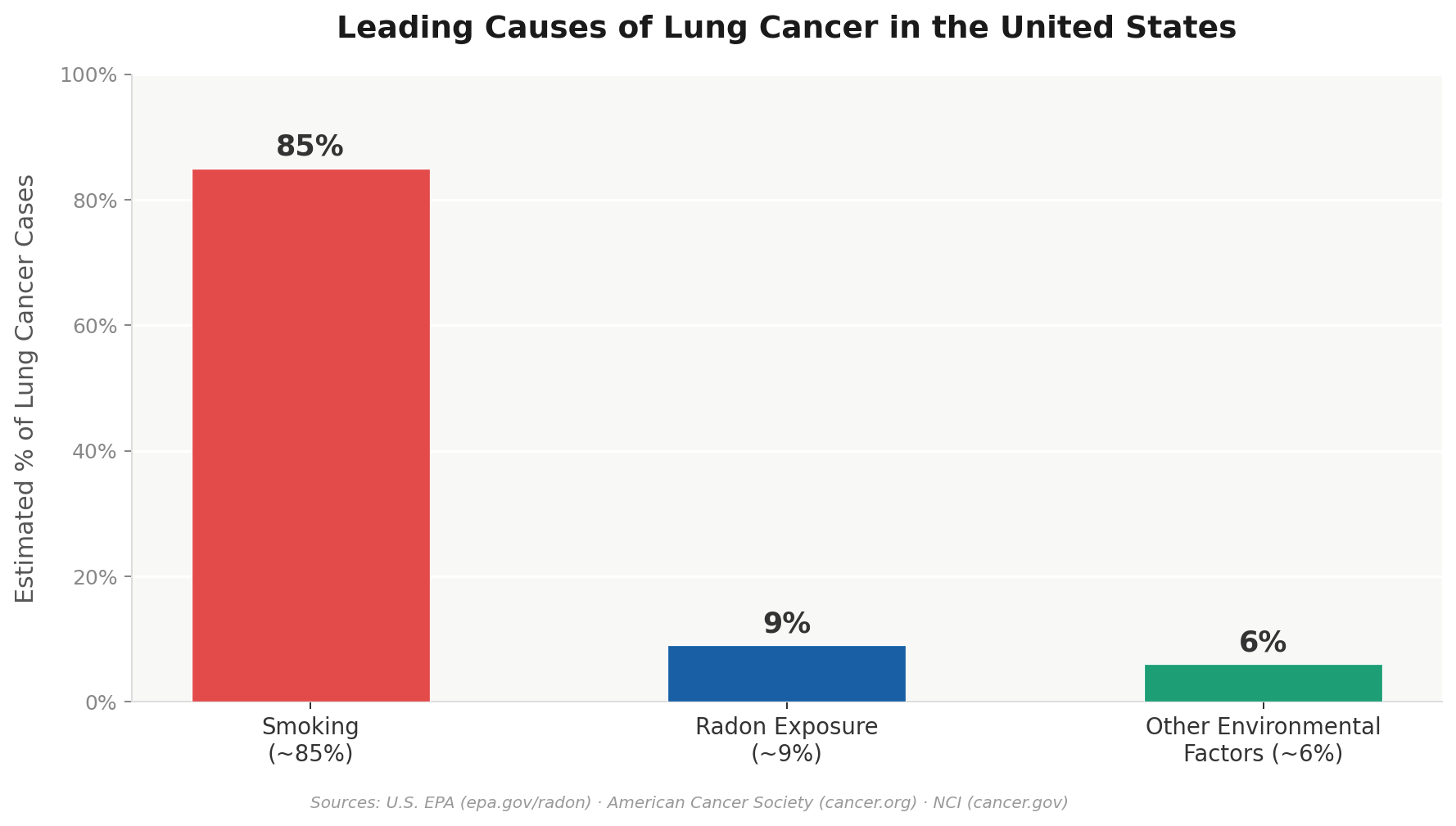
Figure 1: Lung cancer risk factors by estimated percentage. Sources: EPA, American Cancer Society, NCI.
How radon actually causes lung cancer
According to the National Cancer Institute, radon decays quickly, releasing tiny radioactive particles. When inhaled, these particles can damage the cells that line the lung. Long-term exposure can lead to lung cancer, the only cancer proven to be associated with inhaling radon.
The danger is cumulative. One breath containing elevated radon may not harm you, whereas years of daily exposure in a home with levels above 4.0 pCi/L only increases your risk of developing lung cancer. No level of exposure to radon is without risk. The lower your levels, the better.
The EPA notes that for smokers who are also exposed to radon, the combined risk is significantly higher. About 62 out of every 1,000 smokers exposed to elevated radon will develop lung cancer, compared to 7 per 1,000 for non-smokers at the same level. If you or someone in your household smokes, testing becomes even more urgent.
Radon exposure has no symptoms.
That is the problem.
This is one of the most important things to understand. There are no early warning signs of radon exposure. No cough, no shortness of breath, no fatigue that would point you toward your home’s air quality.
By the time lung cancer is diagnosed, it is often at an advanced stage. Research published by Eisenhower Health finds that for non-small cell lung cancer, which accounts for about 80% of cases, the cure rate can reach 90% when caught early. This is exactly why prevention matters so much. The best outcome in lung cancer is avoiding it entirely. Radon testing and mitigation is one of the most direct actions you can take.
Who should be screened for lung cancer?
Testing your home for radon is not the same as screening for lung cancer, but the two go hand in hand. If you have been exposed to elevated radon for years, your doctor may recommend lung cancer screening.
The American Cancer Society recommends yearly lung cancer screening with a low-dose CT scan (LDCT) for adults aged 50 to 80 who have a 20 or more pack-year smoking history and currently smoke or have quit within the past 15 years.
Importantly, the National Comprehensive Cancer Network (NCCN) lists radon exposure as an additional risk factor that can qualify individuals aged 50 and older with a 20 or more pack-year history for annual LDCT screening. If you have lived in a home with elevated radon for an extended period, talk to your doctor.
What you can do this April
1. Test your home for radon
A radon test kit takes 48 hours to run and costs as little as $15 to $30. You can purchase one online, at a hardware store, or through your state radon program. Short-term kits give you a quick read. Long-term kits run over 90 days and provide a more detailed picture of radon in your home over time. Either way, you need to know the radon risk in your home. The only way to know is with a test.
2. Know the EPA action level
The EPA recommends taking action when radon reaches 4.0 pCi/L or above. Many experts, including the World Health Organization, recommend considering mitigation above 2.0 pCi/L. There is no known safe level of radon exposure.
3. Call a certified professional if levels are elevated
A radon mitigation system uses sub-slab depressurization to draw radon from beneath your home and vent it safely outside before it enters your living space. According to Green Bay Oncology, professional mitigation systems can often reduce indoor radon levels by up to 99%. The process is non-invasive and typically takes one day. Protect Environmental offers certified mitigation nationwide.
4. Retest every two years
Radon levels change as your home settles, seasons shift, and foundation seals age. A working mitigation fan is not a guarantee of safe air. Retest every two years, and after any major renovation or after a mitigation system is installed.
A word from Kyle Hoylman, Executive Chairman
“I’ve spent more than 20 years working in radon mitigation, and I’ve been to too many homes where a family only tested after someone received a lung cancer diagnosis. Radon is preventable. Testing is easy. And the peace of mind that comes from knowing your home is safe is worth far more than the cost of the test. This April, I encourage every homeowner to get their home tested. It might be the most important thing you do for your family’s health this year.”
– Kyle Hoylman, Executive Chairman, Protect Environmental
Test My Home!
Professional radon testing is the first step to making your home a safe place to breathe.

