
Quick Answer
Radon testing measures the amount of radon in a building, and radon abatement, also called mitigation, lowers it. Testing tells you whether a home has a problem, and abatement fixes it by venting radon safely outside. The EPA recommends testing every home and taking action at 4.0 pCi/L or higher.
Radon is a natural radioactive gas that seeps up from the soil and collects inside homes. You cannot see it, smell it, or taste it, which is exactly why it is easy to overlook. If the topic is new to you, our What is Radon guide is a good place to start. The reassuring part is that radon is one of the few home health risks you can measure precisely and fix permanently. Two steps make that possible: testing to find out where you stand, and abatement to bring an elevated level back down. This guide walks through both, what they involve, what the numbers mean, and what to expect along the way.
What is radon testing?
Radon testing is the only way to know how much radon is in a building, since the gas gives no signal you can sense. A test measures the concentration in the air over a set period and reports it in picocuries per liter, written pCi/L. There are a few common approaches:
- Short-term tests run from two to ninety days and give a quick snapshot, often used during a home sale.
- Long-term tests run more than ninety days and give a more accurate picture of your year-round average, since radon rises and falls with the seasons.
- Continuous monitors measure hour by hour and are typically used by professionals for fast, detailed results.
The EPA recommends that every home be tested, and tested again every two years or after a major renovation. A professional radon test gives you documented, reliable results you can act on.
What do your radon results mean?
Radon is measured in pCi/L, and the lower the number, the better. The U.S. EPA recommends taking action to reduce radon when a result reaches 4.0 pCi/L or higher, and suggests considering action between 2.0 and 4.0. No level is completely risk-free, which is why testing and periodic re-testing matter even after a low reading.

What is radon abatement (mitigation)?
Radon abatement, more commonly called radon mitigation and sometimes radon remediation, is the process of reducing an elevated radon level. The most common and effective method is active soil depressurization, which uses a fan and a sealed pipe to draw radon from beneath the foundation and release it safely above the roofline before it can enter your living space. A well-designed mitigation system can bring a high reading down below the action level and keep it there for years.
How a radon abatement system works
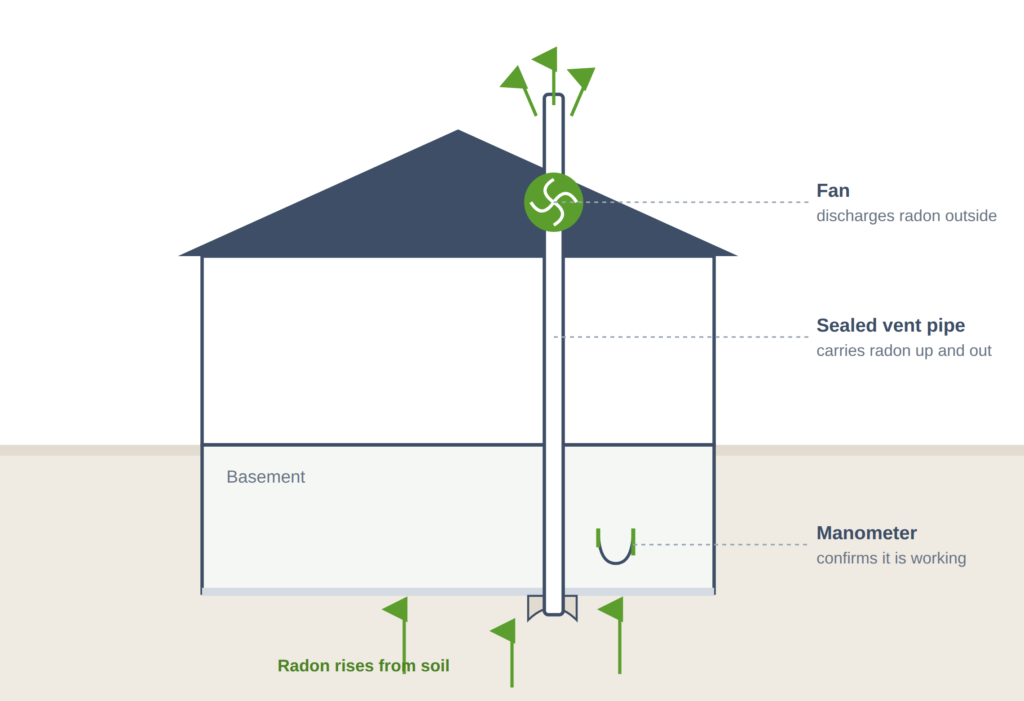
A mitigation system is simpler than most people expect. It draws radon from the soil beneath the foundation and routes it up through a sealed vent pipe, where a continuously running fan discharges it outside. A pressure gauge on the pipe, called a manometer, lets you confirm the system is working at a glance.
What to expect, from test to verified result
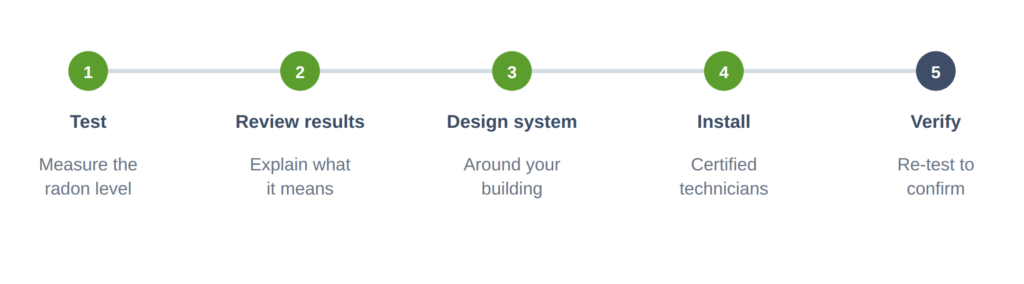
Whether you start with a test or already know your level is high, the path follows the same five steps.
How long does it take, and what does it cost?
A radon test is inexpensive and straightforward, in the range of any home test kit or short professional measurement. Mitigation is the larger investment, and the price depends on your home’s size, foundation type, and the system design required. Most residential systems are installed in about a day. The cost is modest next to the protection it provides, and far less than the long-term health risk of leaving an elevated level in place.
Keeping your system working
A mitigation system is not quite set-and-forget. The fan runs continuously, and the system needs light, occasional maintenance to keep performing at full strength. A quick monthly look at the manometer and a re-test every couple of years are usually all it takes. Protect Environmental is a national partner of the American Lung Association, with certified teams across all 50 states, so help is available wherever you are.
Frequently asked questions
Testing measures how much radon is present in a building. Abatement, also called mitigation, reduces it by installing a system that vents radon safely outside. Testing tells you whether you have a problem, and abatement solves it. The two work together: test to find the level, then mitigate and re-test to confirm.
The EPA recommends every home be tested, and again every two years or after a major renovation. Testing is also a standard step when buying or selling a property. If you have never tested, that is the place to start, since you cannot see or smell radon and a test is the only way to know your level.
No radon level is completely risk-free, but the EPA recommends taking action to reduce radon at 4.0 pCi/L or higher and considering action between 2.0 and 4.0. The lower your level, the lower your long-term risk, which is why re-testing every couple of years is worthwhile even after a low reading.
Most residential mitigation systems are designed and installed in a single visit, often within a day. Larger or commercial buildings can take longer depending on the design. After installation, a follow-up test confirms the system has brought your radon level down below the action level.
Ready to find out where your home stands?
A certified local team can test your property and, if your level is high, design the system to bring it down.
Request My Free Quote Find My Local Team
