
Quick Answer
Choosing a radon mitigation company comes down to certification, local experience, a clear system design for your foundation, a written warranty, and a confirming test after installation. A qualified company explains the plan in plain terms, stands behind the work, and proves the level dropped below the action threshold before calling the job done.
Is this page for you?
- A test showed elevated radon and you want the work done right the first time.
- You are comparing more than one quote and want to know what separates them.
- You are buying a home and need mitigation handled before closing.
- You want a system that lasts, with someone to call if anything changes.
What to look for
- Certification: a recognized national radon credential, plus any state license your area requires.
- Local experience: verifiable work in your region, since soil and construction vary by area.
- A design matched to your foundation: slab, basement, and crawl space each call for a different approach.
- A written warranty and a clear scope, so you know what is covered.
- A post installation test: proof the level dropped below the action threshold before the job is complete.
What affects the system you need
- Foundation type and how the home contacts the soil.
- The number of suction points required.
- Pipe routing and whether you prefer an interior or exterior run.
- Fan sizing for the suction the home needs.
- Soil conditions and existing drainage.
How to compare radon mitigation companies
Risk and compliance
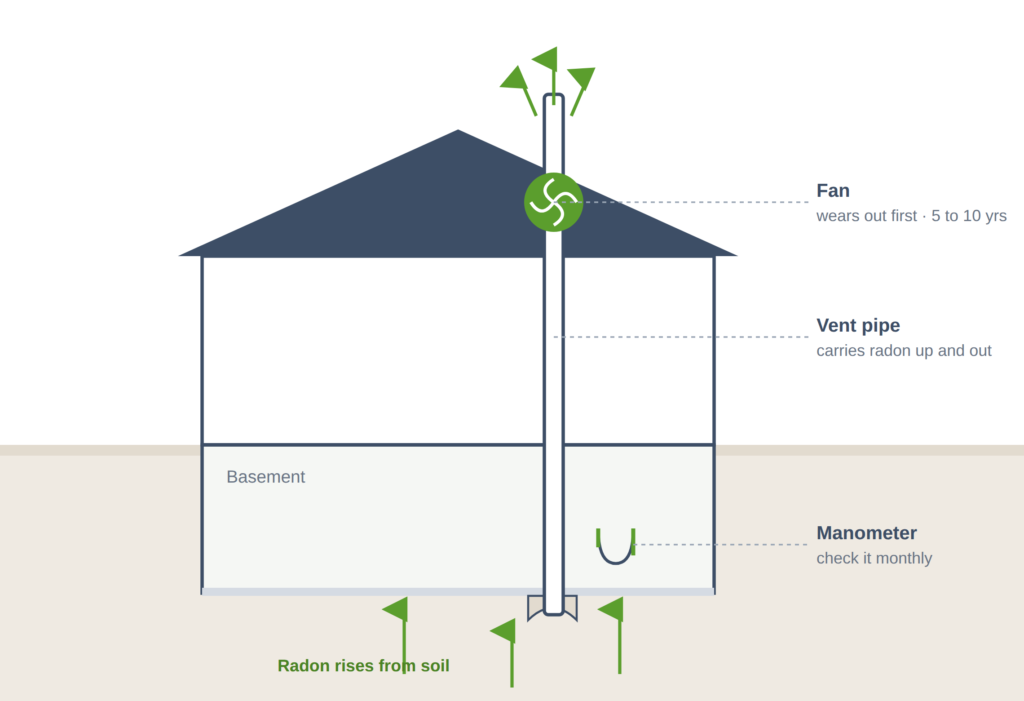
A correctly installed system controls radon for the long term as long as it keeps running. The clearest proof of quality is a post installation test showing the level below 4.0 pCi/L, a working manometer, and venting that meets code. We document the result and back the work.
Frequently Asked Questions
A recognized national radon certification, plus any state license required where you live.
Comparing assessments shows how different professionals approach your specific home and confirms the recommended design makes sense.
A post installation test showing the level dropped below the action threshold, along with a working manometer and code compliant venting.
Not always, but focus on certification, warranty, design, and the confirming test rather than the headline number alone.
Get a clear read on your home
Talk with a certified professional who explains the plan in plain terms and confirms the result with a test.
Get My Free Quote
