Attic Insulation & Air Sealing Services

Your attic is one of the biggest factors in how comfortable your home feels and how hard your HVAC system has to work. Protect Environmental inspects your attic's insulation, air leaks, and ventilation before recommending a fix, because adding insulation on top of leaks that are still there rarely solves the problem.

Reviewed by
General Manager
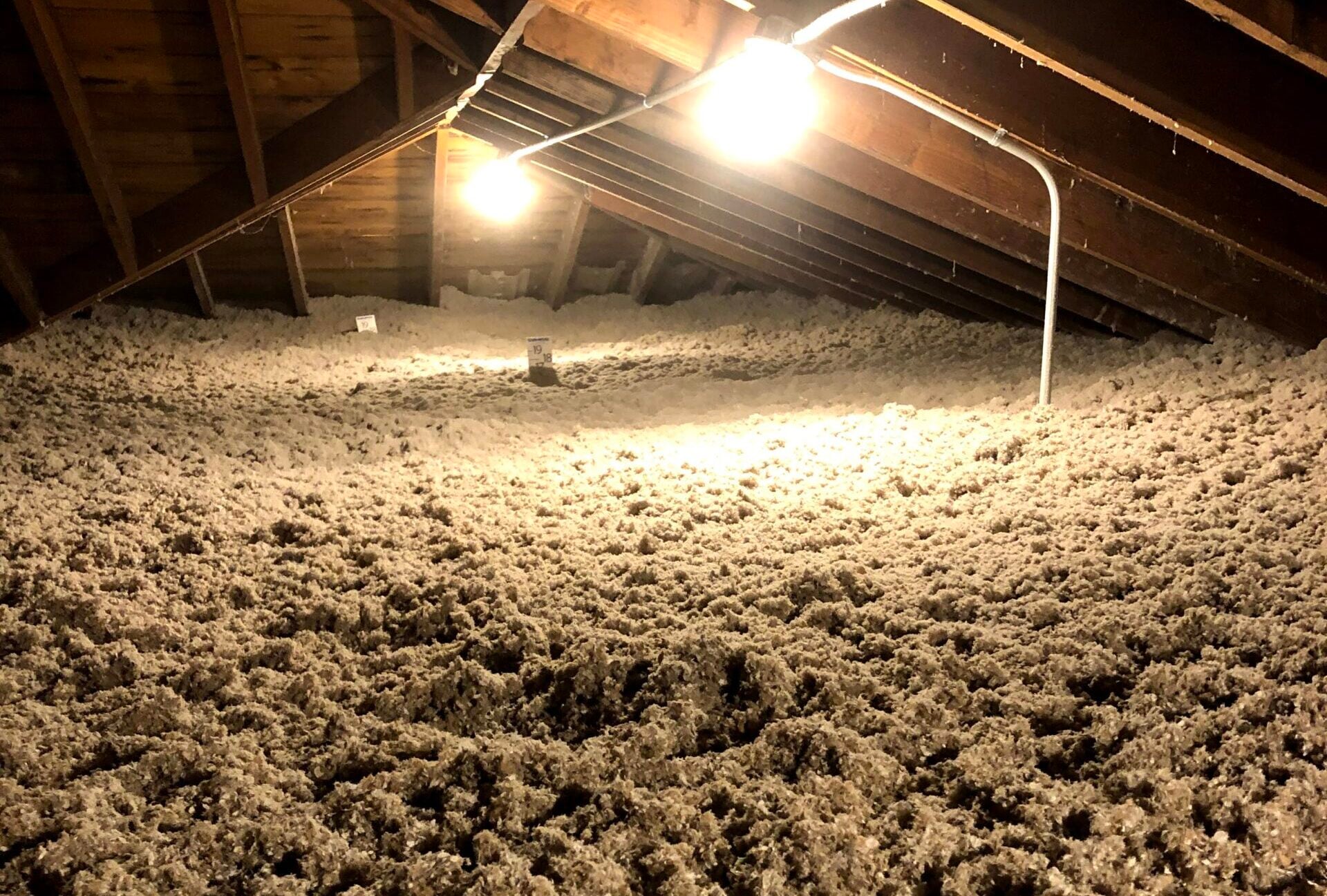
An attic with blown-in cellulose insulation and visible depth markers

What Attic Insulation Involves

Attic insulation slows the transfer of heat into and out of your home through the attic, one of the largest sources of heat loss in winter and heat gain in summer. On its own, insulation doesn't stop air from moving through gaps and penetrations in the attic floor, which is why Protect air seals accessible leaks first, then installs insulation to the appropriate level for your home.

Protect's primary blown-in attic material is cellulose. It's installed to the depth and R-value scoped for your specific home and climate zone, rather than a single standard amount applied to every house.

What Attic Insulation InvolvesAttic insulation slows the transfer of heat into and out of your home through the attic, one of the largest sources of heat loss in winter and heat gain in summer.

Thorough, Properly Sealed Attic Insulation

Air-Sealed First

Accessible leaks are sealed before any insulation goes in.

Ventilation-Protected

Soffit ventilation is preserved with baffles so your attic can still breathe.

Depth-Documented

Finished work includes depth markers so you can see exactly what was installed.

Our Attic Insulation Process for Your Home

  1. Inspection and Plan

    On-site inspection of insulation depth, estimated R-value, air leaks, ventilation, and moisture, followed by a written plan before work begins.

  2. Air Sealing

    Accessible gaps, cracks, and penetrations are sealed first.

  3. Insulation

    Cellulose is installed to the scoped depth and R-value, with soffit ventilation preserved using baffles and required clearances protected.

  4. Documentation

    Depth markers are added and the completed work is documented.

Ready for a More Comfortable Attic?

Request Service

Not Sure Yet? Start With an Assessment

If you're not sure whether your attic needs air sealing, more insulation, or both, an assessment is the place to start.

Learn More

The Protect Promise

Whole-Home Approach

We look beyond the attic alone to air movement, moisture, and the building envelope as a whole.

Building-Science Approach

Inspection and diagnostics guide every recommendation, not a standard package.

Radon-Aware Crews

Our crews are trained to identify and protect existing radon system components during insulation work.

Attic Insulation in Your Area

Attic insulation is currently available in Denver, CO and Salt Lake City, UT.

Frequently Asked Questions

What are the signs I need more attic insulation?

Uneven temperatures between floors, a hot upstairs in summer, cold floors or ceilings in winter, high heating or cooling bills, and an HVAC system that runs more than it used to are common signs. An assessment can confirm whether your attic insulation is the cause.

What is R-value, and how much do I need in my attic?

R-value measures how well a material resists heat flow, higher means more resistance. The right target depends on your home's construction, climate zone, and local code, which is why Protect confirms the specific number for your home during an assessment rather than quoting one figure for every house.

What is blown-in cellulose insulation, and why does Protect use it?

Cellulose is a blown-in material made primarily from recycled paper fiber. It's Protect's primary material for attic insulation because it fills irregular spaces well and can be installed to a precise depth and R-value.

What happens to my attic's ventilation when you add insulation?

Soffit ventilation is preserved using baffles, so air can still flow through the attic the way it's designed to. Insulation is installed up to, not over, the required clearances.

What happens if you find mold, moisture, or a roof leak during the inspection?

That gets addressed first. Insulation is never installed over an active moisture problem, a roof leak, or mold, those need to be resolved before insulation goes in.

Talk to Protect Environmental About Attic Insulation

Request My Service

Find Your Local Office

What's Your Radon Risk?

Enter your zip code to learn about the radon levels near you.

what's your radon risk?