Air Sealing & Weatherization Services

Insulation slows heat moving through your home. It doesn't stop air from moving through the gaps, cracks, and penetrations that let conditioned air escape and outside air in. Protect Environmental seals those leaks first, so the insulation in your home, whatever's already there or whatever we add, actually does its job.

Reviewed by
General Manager
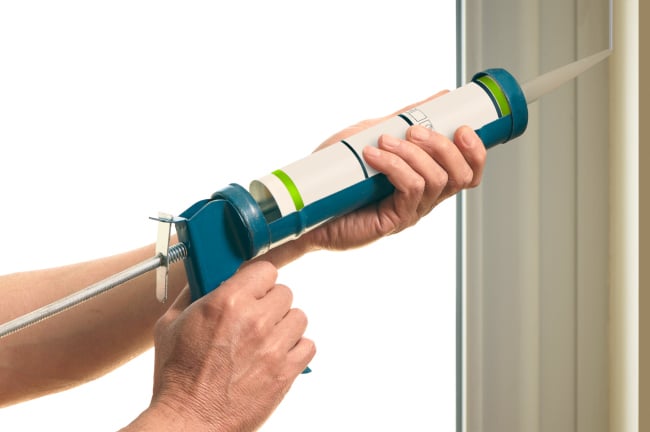
Applying sealant along a window frame

What Air Sealing Involves

Air sealing is the process of closing the gaps, cracks, and penetrations in your home's attic, walls, and foundation that let conditioned air escape and outside air in, places like top plates, can lights, plumbing and wiring penetrations, attic hatches, and rim joists. It's different from weatherization in scope: weatherization is the broader term for improving a home's overall energy performance, air sealing is the specific, foundational step inside that work.

Stack Effect: Why the Whole Home Matters

Stack Effect: Why the Whole Home Matters Warm air rises. As it escapes through the upper part of your home, it pulls outside air in through the lower part, your basement, crawl space, or rim joists, a phenomenon called stack effect.

Warm air rises. As it escapes through the upper part of your home, it pulls outside air in through the lower part, your basement, crawl space, or rim joists, a phenomenon called stack effect. It's why a leak in your basement can show up as a cold draft two floors up, and why Protect treats air sealing as a whole-home job rather than room-by-room patchwork.

Your attic, rim joists, crawl space, and basement are all connected parts of the same building envelope. Sealing one area without the other leaves stack effect pulling air through whatever's left open, which is why Protect's assessment looks at the whole home before recommending where to seal.

Air-Sealed, Then Insulated

Sealed Before Insulated

Accessible air leaks are closed before any insulation goes in or gets added to.

Whole-Envelope Approach

Attic, rim joists, crawl space, and basement are treated as one connected system, not isolated rooms.

Built to Work With Your Attic Insulation

Air sealing and attic insulation are scoped together, see our Attic Insulation page for how the two fit as one job.

Our Air Sealing Process for Your Home

  1. Inspection and Plan

    On-site inspection to identify accessible air leaks across the attic, rim joists, crawl space, and basement, followed by a written plan.

  2. Seal

    Accessible gaps, cracks, and penetrations are sealed.

  3. Coordinate With Insulation

    Where insulation is also being added, sealing happens first so the insulation performs as designed. See the Attic Insulation process for how the two jobs connect.

  4. Document

    The completed work is documented.

Ready to Stop Losing Conditioned Air?

Request Service

Not Sure Yet? Start With an Assessment

If you're not sure whether your home needs air sealing, more attic insulation, or both, an assessment is the place to start. Air sealing and attic insulation are usually scoped as one job, see the Attic Insulation page for the other half of this work.

Learn More

The Protect Promise

Whole-Home Approach

We look at the building envelope as one connected system, not room by room.

Building-Science Approach

Inspection and diagnostics guide every recommendation, not a standard package.

Radon-Aware Crews

Our crews are trained to identify and protect existing radon system components during air sealing work.

Air Sealing in Your Area

Air sealing is currently available in Denver, CO and Salt Lake City, UT.

Frequently Asked Questions

What is air sealing?

Air sealing is the process of closing gaps, cracks, and penetrations in a home's attic, walls, and foundation that let conditioned air escape and outside air in.

What is the stack effect, and how does it affect air sealing?

Stack effect is what happens when warm air rises and escapes through the upper part of your home, pulling outside air in through the lower part, your basement, crawl space, or rim joists. It's why Protect treats air sealing as a whole-home job: sealing one area without the others leaves the stack effect to pull air through whatever's left unsealed.

What's the difference between air sealing and weatherization?

Weatherization is the broader term for improving a home's overall energy performance. Air sealing is the specific, foundational step inside that work, closing the gaps that let conditioned air escape.

Do I need air sealing if my attic already has insulation?

Possibly. Insulation slows heat transfer, it doesn't stop air movement. If your home still feels drafty or your bills stay high despite having insulation, air leakage is a common reason, and it's addressed separately from, and usually before, adding more insulation.

Will air sealing affect my radon mitigation system?

Protect's crews are trained to identify existing radon system components, such as vent pipes and sealed penetrations, and work around them so your system continues to function as designed.

Talk to Protect Environmental About Air Sealing

Request My Service

Find Your Local Office

What's Your Radon Risk?

Enter your zip code to learn about the radon levels near you.

what's your radon risk?