Categories
Blog

Earth Day at Home: Why Indoor Environmental Health Starts With Radon

Quick Answer

Indoor environmental health is the quality of the air you breathe and the water you drink inside your home. This Earth Day, the most meaningful action homeowners can take is testing for radon in indoor air and contaminants in household water, the two most common invisible threats to a safe, healthy home.

Key Facts at a Glance
  • Americans spend roughly 90% of their time indoors (U.S. EPA)
  • Radon causes an estimated 21,000 lung cancer deaths per year in the U.S. (EPA)
  • The EPA action level for indoor radon is 4.0 pCi/L
  • More than 43 million Americans rely on private wells for drinking water (CDC)
  • Protect Environmental has completed 200,000+ soil gas projects across all 50 U.S. states

Why Does Earth Day Belong Inside Your Home?

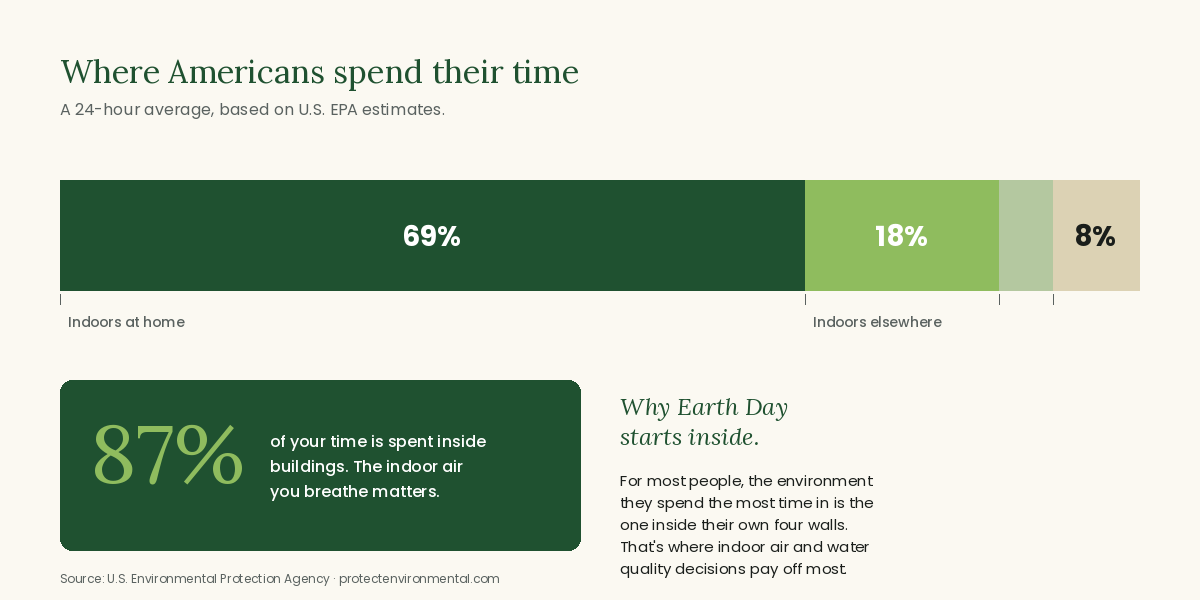
Earth Day usually brings to mind forests, oceans, and carbon emissions. All of that matters. But for most people, the environment they spend the most time in is the one inside their own four walls. The U.S. EPA estimates that Americans spend roughly 90% of their time indoors, which means the air you breathe at home has a far bigger day-to-day impact on your health than the air outside.

That reframes Earth Day in a useful way. Protecting the planet is a long project. Protecting the environment inside your home is something you can do this week, and the results are measurable.

At Protect Environmental, we see this every day. Families learn that their house has elevated radon months after moving in. Homeowners with private wells discover levels of arsenic, uranium, or bacteria they had no idea were there. Most of these issues never show up without a test, because you cannot see, smell, or taste them. Earth Day is a good reminder to look.
What Is Indoor Environmental Health?

Indoor environmental health is the quality of the air, water, and surfaces inside buildings and how they affect the people living and working there. It covers everything from dust and mold to radon gas, volatile organic compounds, and contaminants in tap or well water.


For homeowners, two specific threats stand out. They are the most common, the most dangerous, and the most invisible:

  1. Radon in indoor air
  2. Contaminants in drinking and bathing water

Both are routine. Both are fixable. And both are usually overlooked until someone decides to test.

Why Is Radon the Invisible Earth Day Story Most People Miss?

Radon is a naturally occurring radioactive gas that forms as uranium breaks down in soil. It seeps into homes through foundation cracks, sump pits, crawl spaces, and well water. According to the U.S. Environmental Protection Agency, radon is the second leading cause of lung cancer in the United States and the leading cause among non-smokers. It is linked to an estimated 21,000 lung cancer deaths every year.


The tricky part is that radon cannot be detected by your senses. It has no color, no odor, and no taste. A family can live in a home with levels many times above the EPA action level of 4.0 pCi/L and never know.


The good news: testing is straightforward, and mitigation works. A properly designed radon mitigation system can reduce levels by 99% or more. If you have never tested your home, or if your last test was more than two years ago, Earth Day is a natural prompt to schedule one. See our overview of what radon is and the different types of radon tests to pick the right option for your household. If you already have a system, learn more about radon mitigation for the home and when re-testing is recommended.

Is Water Quality Part of Indoor Environmental Health?

Yes. Water is the second pillar of indoor environmental health. More than 43 million Americans rely on private wells for their drinking water, according to the CDC, and private wells are not regulated by the EPA the way public systems are. That means the person responsible for testing is the homeowner.

Common contaminants vary by geography:

  • Arsenic and uranium in parts of New England and the Mountain West
  • Nitrates in agricultural regions
  • Radon in water in areas with high soil radon
  • Lead from older plumbing, regardless of source
  • Bacteria like E. coli after flooding or well damage

Many of these contaminants have no taste and no smell. Like radon, the only way to know is to test. A certified lab test gives you a baseline, and if anything is elevated, targeted treatment (reverse osmosis, carbon filtration, UV, arsenic-specific media, and others) can bring levels back to safe ranges.

What Can Homeowners Do This Earth Day?

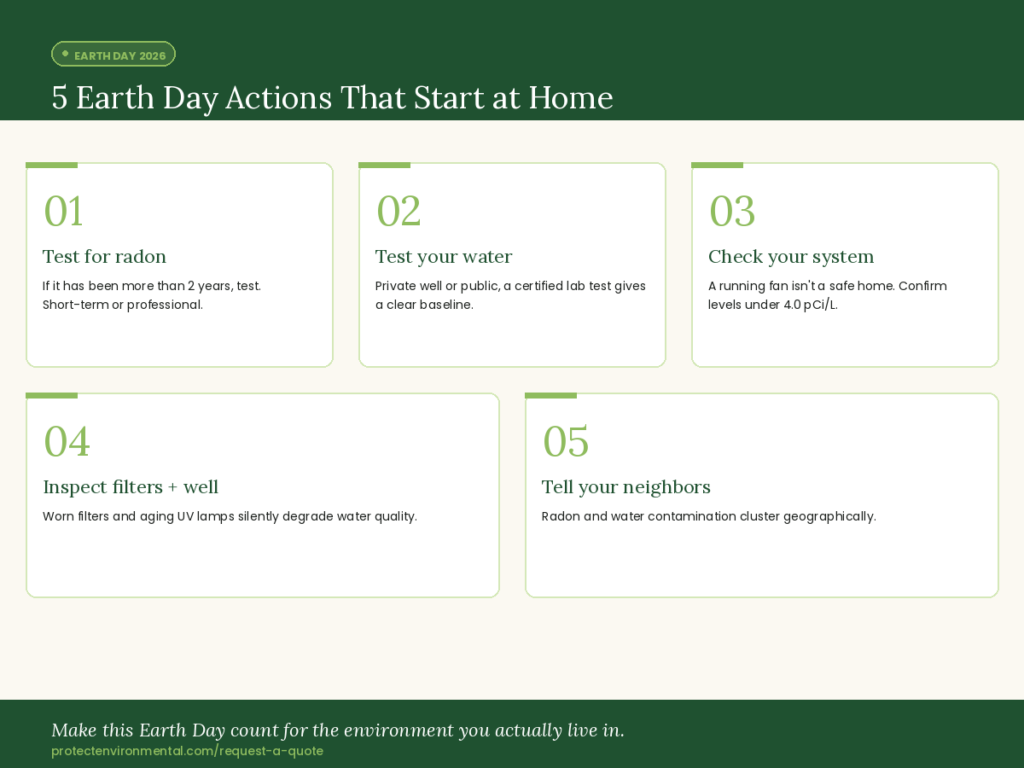
Every year, Earth Day produces a lot of generic advice. Here is a practical list focused on the environment you can actually control: the one inside your home.
How Does Protect Environmental Support Healthy Homes?

Protect Environmental is a national environmental services company focused on healthy, safe indoor environments. Since our founding in 2005, our teams have completed more than 200,000 soil gas projects across all 50 U.S. states and two U.S. territories, making us the largest soil gas contractor in the country.


That scale matters for three reasons:

  • Certified laboratories. Our in-house labs handle radon analysis and water quality panels with consistent quality control, not outsourced processing.
  • Uniform standards. Every technician is certified through the National Radon Proficiency Program or equivalent state licensing, following the same national protocols wherever you live.
  • Comprehensive services. Radon testing, radon mitigation, vapor intrusion mitigation, indoor air quality assessments, and water testing and treatment, all from one team.

Our work is led by Kyle Hoylman, Executive Chairman and co-founder. Kyle is a cancer survivor, chair of the Kentucky Board of Radon Safety, and a member of the EPA Radon Leadership Committee. His personal story drives our national mission: reduce radon exposure in the homes, schools, and workplaces where people spend 90% of their lives.


If you are ready to protect the environment inside your home, request a professional radon test or water quality assessment. Our technicians serve homeowners in every U.S. state with the same certified standards, in-house lab analysis, and long-term service commitment.

Make this Earth Day count for the environment you live in.

Schedule a professional radon test or water quality assessment. Certified technicians and in-house labs, serving homeowners nationwide.

Request a Quote
Categories
Blog

You Tested Your Air. Did You Test Your Water?

What is Water Week 2026?

Water Week 2026 runs April 12-18 and brings together water professionals, utilities, and communities to advocate for clean, safe drinking water nationwide. For homeowners with private wells, especially in New Jersey and Massachusetts, it is also the right moment to test for radon and other contaminants that enter the home through groundwater, a risk most well-water homeowners have never addressed.

Every April, Water Week brings water professionals, utility leaders, and advocates to Washington to push for clean, safe water in every community. This year it runs April 12-18.


But there is a water quality issue that no policy panel addresses because it starts inside your home, underground, before water ever reaches your tap. If your home runs on a private well, this article is for you.

The risk inside the risk

Most homeowners who have tested for radon think of it as an air problem. Radon seeps up from the soil, enters through foundation cracks, and accumulates in basements. 

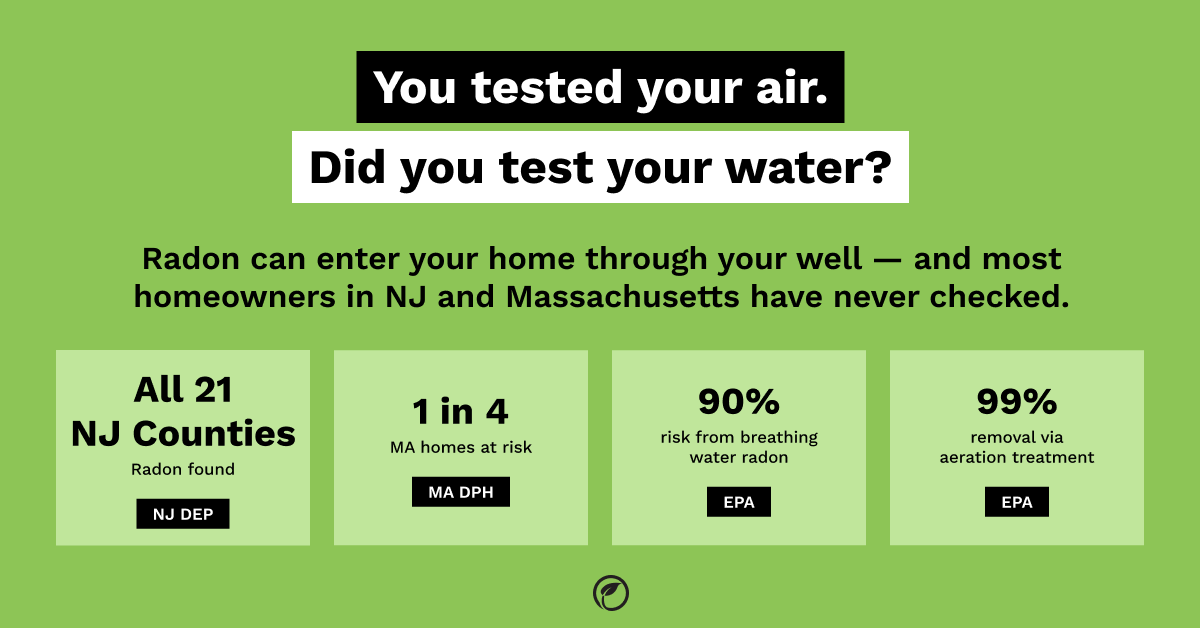
What fewer people know: radon is highly soluble in water. Groundwater moving through uranium-bearing bedrock, the geology that underlies large parts of New Jersey and Massachusetts, absorbs radon and carries it directly into your home through your well.

Then every time you turn on a faucet, take a shower, run the dishwasher, or start the washing machine, radon gas can escape from the water and enter the air you breathe.

According to the U.S. EPA and Environmental Working Group, approximately 90% of the health risk from radon in water comes not from drinking it — but from breathing the gas it releases into indoor air during normal household water use.

Fix the air problem and miss the water source. The risk stays.

What this means for New Jersey homeowners

New Jersey is one of the most radon-active states in the country. Radon gas has been found in all 21 New Jersey counties, with the highest concentrations in the western and northern parts of the state, particularly in Sussex, Warren, Hunterdon, Morris, and Somerset counties. The bedrock geology in these areas, including the Reading Prong formation, is uranium-rich, which means private wells in these regions carry elevated radon contamination risk.

New Jersey

Why NJ well water is a radon concern

  • Radon documented in all 21 counties
  • Reading Prong: one of the most radon-prone geologies in the U.S.
  • NJ Private Well Testing Act (PWTA) required at real estate sale
  • No retesting required between sales — years can pass untested
  • Northwestern NJ carries highest known well water risk

Source: NJ DEP / NJDWQI

Massachusetts

Why MA well water is a radon concern

  • 1 in 4 MA homes may exceed EPA radon action level
  • Bedrock wells: radon classified as a statewide concern
  • 500,000+ MA residents rely on private wells
  • No state requirement to test private well water
  • Only 21% of MA well users tested water last year

Source: MA DPH / MassINC Polling Group 2023

New Jersey is also one of the few states with a mandatory Private Well Testing Act (PWTA), requiring standardized water testing at the point of a real estate sale. Since the law was enacted, it has identified tens of thousands of NJ wells with unsafe contaminant levels. But PWTA testing only happens at sale. If you have been in your home for years without retesting, your well has not been checked.

Well water and radon — key numbers

The risk most homeowners in NJ and Massachusetts have never tested for

Source: NJ DEP · MA Dept. of Public Health · U.S. EPA · EWG · MassINC Polling Group 2023

NJ: radon detected statewide All 21 counties — NJ DEP
100%
MA homes potentially above EPA action level 1 in 4 homes — MA DPH
25%
MA well users who tested water in the past year Only 1 in 5 — MassINC 2023
21%
Health risk from water radon that comes from breathing it Not from drinking — EPA / EWG
90%Preventable
Radon removal via aeration treatment Point-of-entry system — EPA
99%

The two test approach

If your home is on a private well, two tests tell you most of what you need to know:

1. Radon in air — a short-term test placed in the lowest level of your home. Results in 48–96 hours. If elevated, your well water is the next thing to check. Learn about radon air testing.

2. Radon in water — a water sample sent to a certified lab. Results tell you whether radon is entering your home through your water supply and at what concentration.

Water testing can be done at any time of year. If your well has not been in regular use, flush the system for at least 20 minutes before sampling. A certified professional can walk you through the process from start to finish.

Check your home’s average radon risk by ZIP code using Protect Environmental’s National Radon Risk Search tool.

This week is the right moment

Water Week exists because clean water requires active attention not just from policymakers, but from homeowners. The water coming out of your tap deserves the same scrutiny as the air in your basement.

If your home runs on a private well in New Jersey or Massachusetts, this is the week to find out what is actually in it.

Ready to test your water?

Our certified teams in New Jersey and Massachusetts handle everything — testing, results, treatment, and installation. Book today.

Categories
Blog

Your Home’s Air Is a Public Health Issue. This Week, We’re Talking About It.

What is National Public Health Week 2026?

National Public Health Week 2026 runs April 6-12 under the theme “Ready. Set. Action.” One of the most preventable public health threats in American homes is radon, a colorless, odorless radioactive gas that causes more than 21,000 deaths per year. Testing and mitigation are proven, accessible, and can protect any home.

Good Health Doesn't Just Happen

That’s the message behind National Public Health Week 2026, organized by the American Public Health Association. Running April 6-12, NPHW is a national moment to recognize the systems, science, and people that keep communities healthy — and to take action on what still needs attention.

At Protect Environmental, we’re part of this conversation for a specific reason. The air inside your home is one of the most overlooked public health issues in the country. And the invisible gas responsible for more than 21,000 American deaths a year is one most people have never tested for.

That gas is radon. Here’s what you need to know and what you can do today. Start with our full radon guide if you’re new to the topic.

What Makes This a Public Health Issue?

Public health is not just what happens in hospitals or at the policy level. It is built on what happens in the places where people live, breathe, and sleep every day.

Radon is a naturally occurring radioactive gas that forms when uranium breaks down in soil and rock beneath your home. It seeps up through foundations, gathers indoors, and has no odor, color, or taste. The EPA lists it among the top five environmental risks to public health. The U.S. Surgeon General has called it a serious national health threat. And the American Lung Association which Protect Environmental is proud to partner with urges every homeowner to test.

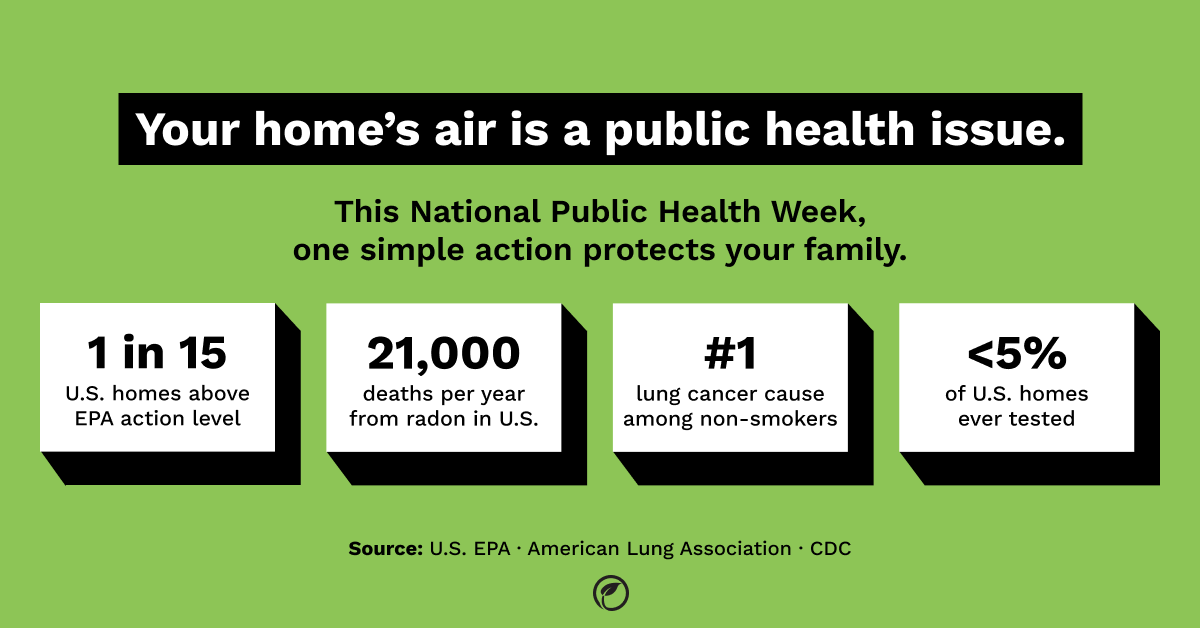
Figure 1: Sources: EPA, American Lung Association, CDC

Here is where the numbers land:

Those numbers are large. The good news: this is a solvable problem. Testing is simple and affordable. Mitigation, when needed, takes less than a day.

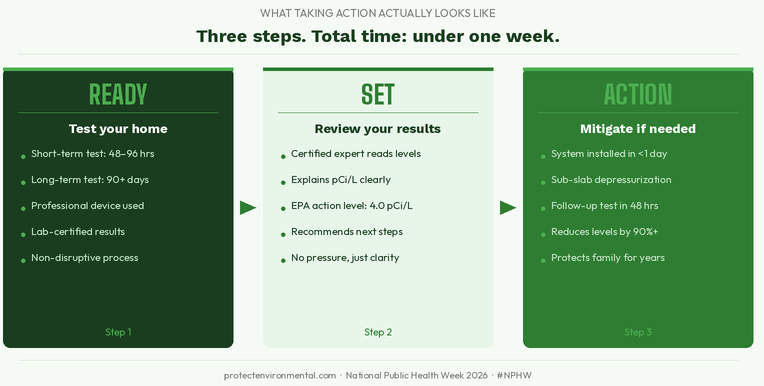
Ready: Know What's in Your Air

Being ready starts with a test. Radon behaves differently in every home, two houses next door to each other can have completely different levels. Age, construction type, and geography are not reliable predictors. The only way to know is to test your specific home.

Short-term tests run 48 to 96 hours. Long-term tests run 90+ days and give a clearer picture of your year-round exposure. Both options are low cost and non disruptive. You can also use our National Radon Risk Search tool to check average levels reported in your ZIP code though nothing replaces an actual test of your home.

The EPA action level is 4.0 pCi/L. At that point, the health risk of continued exposure outweighs the cost of mitigation. Some experts recommend considering action even between 2.0 and 4.0 pCi/L.

Set: What Mitigation Actually Looks Like

If your test comes back elevated, the fix is straightforward. A radon mitigation system creates a pathway for radon to escape before it accumulates inside your home. The most common approach is a sub-slab depressurization uses a pipe and fan to draw radon from beneath your foundation and vent it safely outside.

Installation takes less than a day. Systems are designed around your home’s specific structure, foundation type, and test results. After installation, a 48-hour follow-up test confirms the system is working.

Protect Environmental has completed more than 200,000 soil gas projects across all 50 states. Our teams include RAdata in New Jersey, Radon Be Gone in Columbus, Ace Radon in Denver, and Cliff Cummings in Boston, each bringing national expertise and local knowledge to every project. See all residential radon services here.

Action: One Thing You Can Do Right Now

National Public Health Week is asking all of us to do something. Here’s what that looks like for your home:

  • Test your home if you have not done so in the past two years or ever.
  • Check if your child’s school has been tested. The EPA estimates more than 70,000 classrooms have elevated radon levels.
  • Use our radon ZIP code search tool to understand the average risk in your community.
  • Share this article with someone who hasn’t thought about radon yet. That conversation matters.

Public health is built on individual choices that add up. Testing your home is one of the most direct actions you can take for your family’s long-term health — and it costs less than a tank of gas.

Ready to take action? Schedule a radon test or request a quote at protectenvironmental.com. 


Questions? Browse our FAQ or read the top 8 things every homeowner should know about radon.

Test My Home!

Professional radon testing is the first step to making your home a safe place to breathe.

Categories
Blog

National Cancer Prevention and Early Detection Month Homeowner Guide

April is National Cancer Prevention and Early Detection Month. It is a time when hospitals, research institutions, and public health organizations across the country raise awareness about the cancers that are most preventable, and the steps people can take to prevent a diagnosis.

For us at Protect Environmental, this month has a specific meaning. According to the U.S. Environmental Protection Agency, radon is the leading cause of lung cancer deaths among nonsmokers in America, claiming the lives of more than 21,000 Americans each year. It is invisible, odorless, and has no symptoms until the damage is already done. Yet, exposure to radon can be prevented.

If you have never tested your home for radon, this is the right time to start.

What is radon?

Radon is a naturally occurring radioactive gas that forms when uranium in soil and rock breaks down. According to the National Cancer Institute, it seeps up through the ground and diffuses into the air, entering homes through cracks in floors, walls, or foundations, where it can collect to elevated levels indoors.

You cannot detect it without a test. There is no smell, no visible sign, no warning. Most people have no idea their home has elevated radon levels until they test.

Why radon matters for cancer prevention

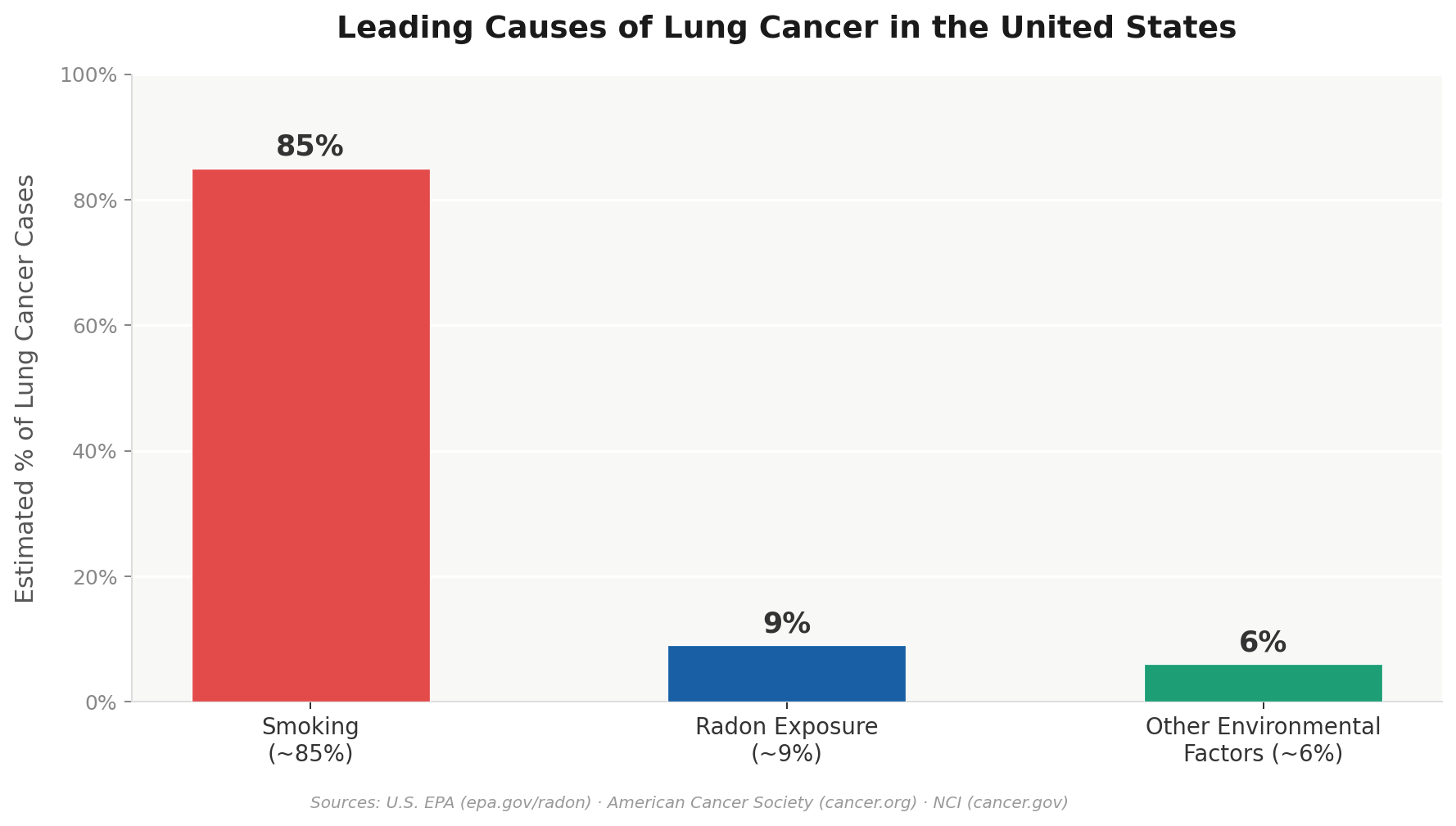
According to the National Cancer Institute, scientists estimate that 15,000 to 22,000 lung cancer deaths in the United States each year are related to radon. Radon is the second leading cause of lung cancer overall, and the leading cause among people who have never smoked.

To put that into context, the Association of Community Cancer Centers reports that lung cancer claims more lives in the US each year than colon, prostate, and breast cancer combined.

Radon is not a rare or fringe risk. The American Lung Association estimates that 1 in 15 homes nationwide have radon levels above the EPA action level of 4.0 pCi/L. In some states, as many as 1 in 3 homes have elevated levels.

Figure 1: Lung cancer risk factors by estimated percentage. Sources: EPA, American Cancer Society, NCI.

How radon actually causes lung cancer

According to the National Cancer Institute, radon decays quickly, releasing tiny radioactive particles. When inhaled, these particles can damage the cells that line the lung. Long-term exposure can lead to lung cancer, the only cancer proven to be associated with inhaling radon.

The danger is cumulative. One breath containing elevated radon may not harm you, whereas years of daily exposure in a home with levels above 4.0 pCi/L only increases your risk of developing lung cancer. No level of exposure to radon is without risk. The lower your levels, the better. 

The EPA notes that for smokers who are also exposed to radon, the combined risk is significantly higher. About 62 out of every 1,000 smokers exposed to elevated radon will develop lung cancer, compared to 7 per 1,000 for non-smokers at the same level. If you or someone in your household smokes, testing becomes even more urgent.

Radon exposure has no symptoms.
That is the problem.

This is one of the most important things to understand. There are no early warning signs of radon exposure. No cough, no shortness of breath, no fatigue that would point you toward your home’s air quality.

By the time lung cancer is diagnosed, it is often at an advanced stage. Research published by Eisenhower Health finds that for non-small cell lung cancer, which accounts for about 80% of cases, the cure rate can reach 90% when caught early. This is exactly why prevention matters so much. The best outcome in lung cancer is avoiding it entirely. Radon testing and mitigation is one of the most direct actions you can take.

Who should be screened for lung cancer?

Testing your home for radon is not the same as screening for lung cancer, but the two go hand in hand. If you have been exposed to elevated radon for years, your doctor may recommend lung cancer screening.

The American Cancer Society recommends yearly lung cancer screening with a low-dose CT scan (LDCT) for adults aged 50 to 80 who have a 20 or more pack-year smoking history and currently smoke or have quit within the past 15 years.

Importantly, the National Comprehensive Cancer Network (NCCN) lists radon exposure as an additional risk factor that can qualify individuals aged 50 and older with a 20 or more pack-year history for annual LDCT screening. If you have lived in a home with elevated radon for an extended period, talk to your doctor.

What you can do this April

1. Test your home for radon

A radon test kit takes 48 hours to run and costs as little as $15 to $30. You can purchase one online, at a hardware store, or through your state radon program. Short-term kits give you a quick read. Long-term kits run over 90 days and provide a more detailed picture of radon in your home over time. Either way, you need to know the radon risk in your home. The only way to know is with a test.

2. Know the EPA action level

The EPA recommends taking action when radon reaches 4.0 pCi/L or above. Many experts, including the World Health Organization, recommend considering mitigation above 2.0 pCi/L. There is no known safe level of radon exposure.

3. Call a certified professional if levels are elevated

A radon mitigation system uses sub-slab depressurization to draw radon from beneath your home and vent it safely outside before it enters your living space. According to Green Bay Oncology, professional mitigation systems can often reduce indoor radon levels by up to 99%. The process is non-invasive and typically takes one day. Protect Environmental offers certified mitigation nationwide.

4. Retest every two years

Radon levels change as your home settles, seasons shift, and foundation seals age. A working mitigation fan is not a guarantee of safe air. Retest every two years, and after any major renovation or after a mitigation system is installed.


A word from Kyle Hoylman, Executive Chairman

“I’ve spent more than 20 years working in radon mitigation, and I’ve been to too many homes where a family only tested after someone received a lung cancer diagnosis. Radon is preventable. Testing is easy. And the peace of mind that comes from knowing your home is safe is worth far more than the cost of the test. This April, I encourage every homeowner to get their home tested. It might be the most important thing you do for your family’s health this year.”


– Kyle Hoylman, Executive Chairman, Protect Environmental

Test My Home!

Professional radon testing is the first step to making your home a safe place to breathe.

Find Your Local Office

What's Your Radon Risk?

Enter your zip code to learn about the radon levels near you.

what's your radon risk?

0% APR

FOR 24 MONTHS

Finance Your Radon Mitigation Installation

Offer Ends: 2/29/24

USE CODE: LoveYourLungs