Categories
Blog

Radon Testing and Abatement: A Homeowner’s Guide

Quick Answer


Radon testing measures the amount of radon in a building, and radon abatement, also called mitigation, lowers it. Testing tells you whether a home has a problem, and abatement fixes it by venting radon safely outside. The EPA recommends testing every home and taking action at 4.0 pCi/L or higher.

Radon is a natural radioactive gas that seeps up from the soil and collects inside homes. You cannot see it, smell it, or taste it, which is exactly why it is easy to overlook. If the topic is new to you, our What is Radon guide is a good place to start. The reassuring part is that radon is one of the few home health risks you can measure precisely and fix permanently. Two steps make that possible: testing to find out where you stand, and abatement to bring an elevated level back down. This guide walks through both, what they involve, what the numbers mean, and what to expect along the way.

What is radon testing?

Radon testing is the only way to know how much radon is in a building, since the gas gives no signal you can sense. A test measures the concentration in the air over a set period and reports it in picocuries per liter, written pCi/L. There are a few common approaches:

  • Short-term tests run from two to ninety days and give a quick snapshot, often used during a home sale.
  • Long-term tests run more than ninety days and give a more accurate picture of your year-round average, since radon rises and falls with the seasons.
  • Continuous monitors measure hour by hour and are typically used by professionals for fast, detailed results.

The EPA recommends that every home be tested, and tested again every two years or after a major renovation. A professional radon test gives you documented, reliable results you can act on.

What do your radon results mean?

Radon is measured in pCi/L, and the lower the number, the better. The U.S. EPA recommends taking action to reduce radon when a result reaches 4.0 pCi/L or higher, and suggests considering action between 2.0 and 4.0. No level is completely risk-free, which is why testing and periodic re-testing matter even after a low reading.

The EPA recommends mitigation at 4.0 pCi/L or higher. Not sure of your number? Check average levels for your zip code.

What is radon abatement (mitigation)?

Radon abatement, more commonly called radon mitigation and sometimes radon remediation, is the process of reducing an elevated radon level. The most common and effective method is active soil depressurization, which uses a fan and a sealed pipe to draw radon from beneath the foundation and release it safely above the roofline before it can enter your living space. A well-designed mitigation system can bring a high reading down below the action level and keep it there for years.

How a radon abatement system works

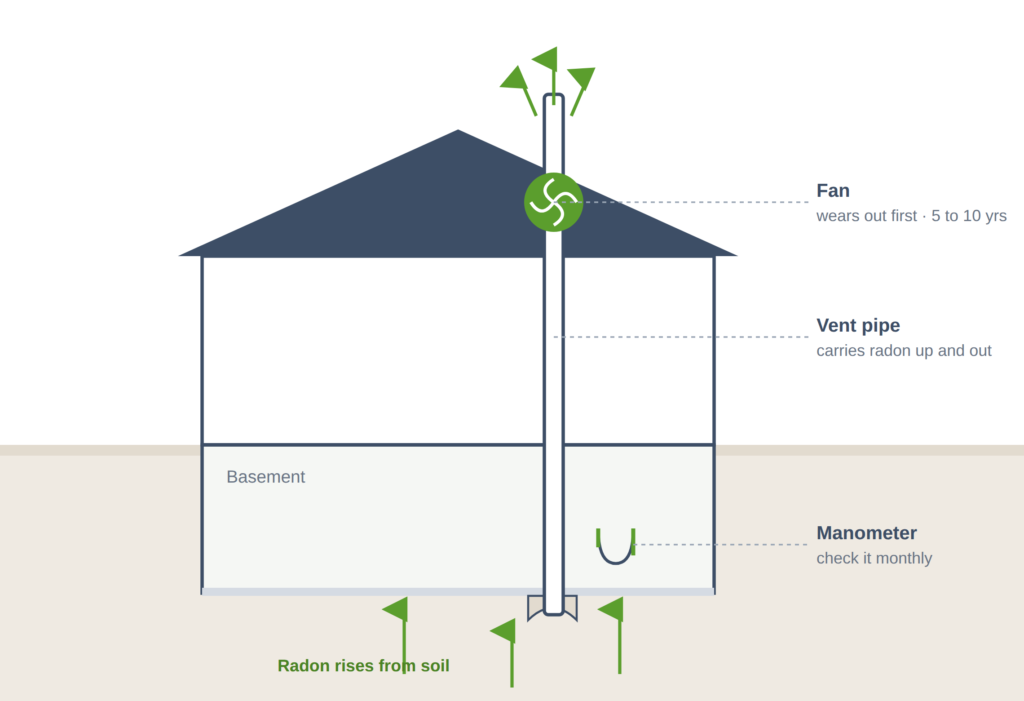
A mitigation system is simpler than most people expect. It draws radon from the soil beneath the foundation and routes it up through a sealed vent pipe, where a continuously running fan discharges it outside. A pressure gauge on the pipe, called a manometer, lets you confirm the system is working at a glance.
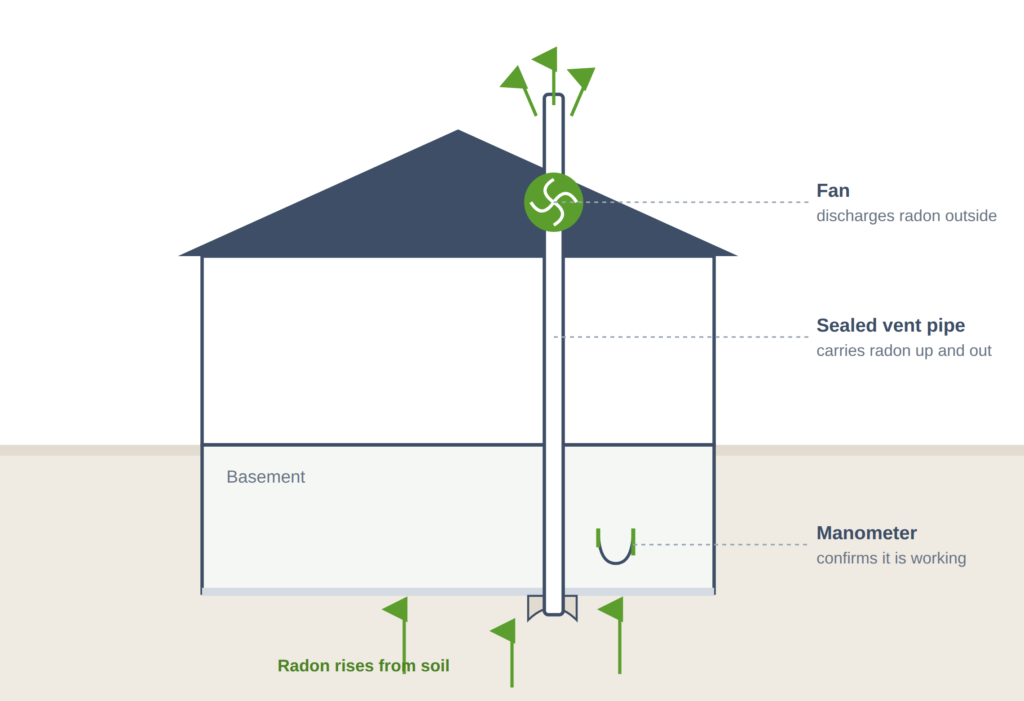
A typical active soil depressurization system. Every system is sized and placed around the specific building.

What to expect, from test to verified result

Whether you start with a test or already know your level is high, the path follows the same five steps.
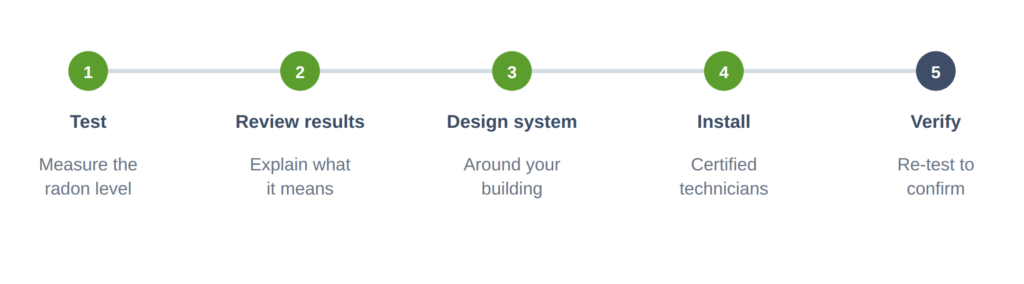
Mitigation finishes the same way it starts, with a measurement, so you can see the level actually dropped.

How long does it take, and what does it cost?

A radon test is inexpensive and straightforward, in the range of any home test kit or short professional measurement. Mitigation is the larger investment, and the price depends on your home’s size, foundation type, and the system design required. Most residential systems are installed in about a day. The cost is modest next to the protection it provides, and far less than the long-term health risk of leaving an elevated level in place.

Keeping your system working

A mitigation system is not quite set-and-forget. The fan runs continuously, and the system needs light, occasional maintenance to keep performing at full strength. A quick monthly look at the manometer and a re-test every couple of years are usually all it takes. Protect Environmental is a national partner of the American Lung Association, with certified teams across all 50 states, so help is available wherever you are.

Frequently asked questions

Testing measures how much radon is present in a building. Abatement, also called mitigation, reduces it by installing a system that vents radon safely outside. Testing tells you whether you have a problem, and abatement solves it. The two work together: test to find the level, then mitigate and re-test to confirm.

The EPA recommends every home be tested, and again every two years or after a major renovation. Testing is also a standard step when buying or selling a property. If you have never tested, that is the place to start, since you cannot see or smell radon and a test is the only way to know your level.

No radon level is completely risk-free, but the EPA recommends taking action to reduce radon at 4.0 pCi/L or higher and considering action between 2.0 and 4.0. The lower your level, the lower your long-term risk, which is why re-testing every couple of years is worthwhile even after a low reading.

Most residential mitigation systems are designed and installed in a single visit, often within a day. Larger or commercial buildings can take longer depending on the design. After installation, a follow-up test confirms the system has brought your radon level down below the action level.

Ready to find out where your home stands?

A certified local team can test your property and, if your level is high, design the system to bring it down.

Request My Free Quote Find My Local Team

Categories
Blog

Radon in Colorado: A Denver Homeowner’s Guide

Reviewed by an Expert
General Manager, Denver · NRPP-Certified Radon Professional
NRPP RMP #113224 · Colorado Front Range

Quick Answer

Radon is common across Colorado, where about half of homes test above the EPA action level of 4.0 pCi/L. The Front Range, including Denver, sits on uranium-rich soil that releases radon into homes. Because levels vary house to house, the only way to know yours is to test, then mitigate if it is high.

If you own a home in Denver or anywhere along the Front Range, radon is one health risk worth taking seriously, and one of the easiest to deal with. Colorado consistently ranks among the highest-radon states in the country. The good news is that radon is measurable and fixable, and Colorado offers more homeowner support than most states. This guide covers why the state tests so high, what the numbers actually mean, the local rules you should know, and how to test and fix a Denver home.

Why is radon so common in Colorado?

Radon forms naturally as uranium in the soil breaks down. According to the Colorado Department of Public Health and Environment, radon in Colorado moves from uranium-bearing granite deposits in the soil up into the air, and elevated levels have been found in every part of the state. A few things make the Front Range especially prone to it:

  • Uranium-rich geology. The granite and rocky soils common across Colorado contain more uranium than the national average, so more radon is produced underfoot.
  • Basements and tight homes. Many Denver-area homes have basements and finished lower levels, the part of a house where radon collects, and modern, well-sealed construction holds it in.
  • Climate and heating. Long heating seasons keep homes closed up, and the pressure difference between a warm house and cold soil pulls radon indoors.

If you want to learn the basics first, our What is Radon guide is a good companion to this page.

  •  

How high is radon in Colorado, really?

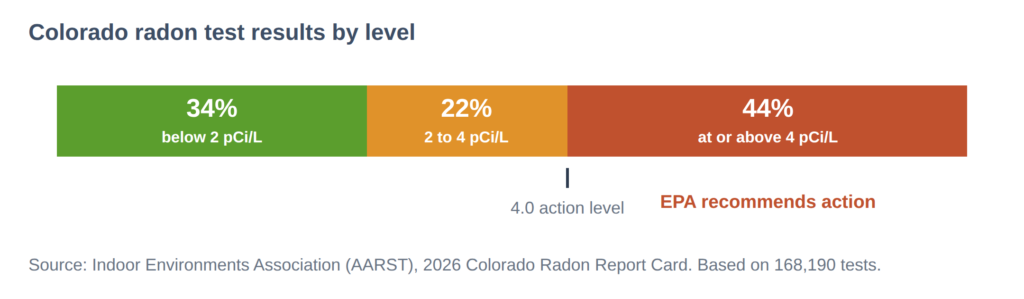
The numbers are striking. In the 2026 Radon Report Card from the Indoor Environments Association (AARST), based on more than 168,000 Colorado tests, 44 percent of results came in at or above the 4.0 pCi/L action level, and another 22 percent fell in the elevated 2 to 4 range. CDPHE puts it simply: about half of Colorado homes test above the level where the EPA recommends action.

The EPA recommends mitigation at 4.0 pCi/L or higher. Not sure of your number? Check average levels for your zip code.

That exposure has real consequences. CDPHE attributes roughly 500 lung cancer deaths a year in Colorado to radon, which is the second leading cause of lung cancer after smoking. None of this is cause for alarm, but it is a strong reason to find out where your own home stands.

~halfof Colorado homes test above 4.0 pCi/L
44%of tests at or above the action level
~500radon-related lung cancer deaths a year in Colorado
Allparts of the state can have elevated radon

What this means for Denver homeowners

Radon does not follow city limits or neighborhood lines. Two houses on the same Denver block can test very differently depending on soil, foundation, and construction. That is why CDPHE encourages every homeowner to test regardless of a neighbor’s results. Whether you are in central Denver, Aurora, Lakewood, Boulder, Fort Collins, or Colorado Springs, the guidance is the same: do not assume, measure. You can check average radon levels for your zip code to understand local risk, then test your own home to get your real number.

Colorado radon rules every homeowner should know

Colorado has more radon structure in place than many states, which works in your favor:

  • Real estate disclosure is required. Colorado requires a radon brochure and disclosure in home sales and rental agreements, so radon usually comes up during a transaction. See CDPHE’s radon and real estate resources.
  • Professionals must be certified and licensed. Colorado requires radon measurement and mitigation pros to be certified through the NRPP or NRSB and licensed by the Colorado Department of Regulatory Agencies (DORA). It is fair to ask any contractor for both.
  • Schools are tested. Colorado requires radon testing in public schools, part of a broader push to take indoor air seriously statewide.
  • Help is available. CDPHE offers free radon test kits and a Low Income Radon Mitigation Assistance program for qualifying homeowners.

How to test your Colorado home

Testing is simple, inexpensive, and the only way to know your level. Radon is measured in picocuries per liter (pCi/L), and the U.S. EPA recommends acting at 4.0 or higher.

Mitigation finishes the same way it starts, with a measurement, so you can see the level actually dropped.

You have a few options. Colorado homeowners can request a free test kit through CDPHE, use a short-term kit for a quick snapshot, or have a professional run a documented test, which is the standard during a home sale. The EPA recommends re-testing every two years either way.

What if your radon level is high? Mitigation in Denver and Colorado

An elevated result is not an emergency, and it is very fixable. Radon mitigation, the process of lowering radon, most often uses active soil depressurization: a fan and a sealed pipe draw radon from beneath the foundation and vent it safely above the roofline. A well-designed mitigation system can bring even a high Colorado reading down below the action level and keep it there.

On cost, CDPHE reports that a typical mitigation system for an existing single-family Colorado home runs roughly 1,300 to 3,000 dollars, with passive systems costing much less to activate, and the state’s Low Income Radon Mitigation Assistance program can help qualifying homeowners. Most systems install in about a day, followed by a verification test. Protect Environmental’s Denver radon team is NRPP certified and Colorado licensed, and serves the metro area and the wider Front Range. Once a system is in, a little ongoing maintenance keeps it working for years.

Frequently asked questions

Yes. Colorado is one of the highest-radon states in the country. About half of homes test above the EPA action level of 4.0 pCi/L, and the Indoor Environments Association found 44 percent of Colorado tests at or above that level. Radon is found in every part of the state, so testing is recommended for every home.

Denver and the Front Range sit on uranium-rich soil that produces radon, and many homes test elevated. Levels vary significantly from house to house, even on the same block, so a neighbor’s result does not predict yours. The only way to know your Denver home’s level is to test it.

Yes. Colorado requires a radon brochure and disclosure as part of real estate transactions and rental agreements. Radon testing is a common step in Colorado home sales, and buyers often request a test or mitigation as a condition of purchase.

According to CDPHE, a typical mitigation system for an existing single-family Colorado home runs roughly 1,300 to 3,000 dollars, and activating a passive system with a fan costs much less. Costs vary by home size and design, so it is worth getting more than one bid. Colorado also offers a low-income assistance program.

Find out where your Colorado home stands

A certified, Colorado-licensed local team can test your Denver or Front Range home and, if your level is high, design the system to bring it down.

Request My Free Quote Find My Denver Team
Categories
Blog

Radon Mitigation System Maintenance: Homeowner’s Guide

Quick Answer


Radon mitigation systems need light, regular maintenance to keep working. Check the fan’s pressure gauge monthly, listen for changes in fan noise, and have the system inspected every two years. Most radon fans last about five to ten years before they need replacing. Re-test your radon levels every two years to confirm protection.

A radon mitigation system is one of those things that fades into the background once it is installed. The fan hums quietly outside, the pipe runs up the side of the house, and life goes on. If yours was put in eight, ten, or fifteen years ago, there is a fair chance no one has looked at it since. That is exactly when a quiet maintenance check pays off, because the parts that do the work do not last forever, and a system that has stopped pulling radon out of your home gives no obvious warning.

An active radon system has one moving part (the fan) and one gauge to watch (the manometer). Those are the two things to keep an eye on.

Do radon mitigation systems need maintenance?

Yes, though not much. A standard active soil depressurization system has one moving part, the fan, and one thing to watch, the pressure gauge on the pipe. There is no filter to change and no fluid to top off. Maintenance is mostly a matter of confirming the system is still moving air, catching a worn fan before it fails, and re-testing your radon level on a regular schedule. Think of it the way you think of a sump pump or a water heater. It runs on its own for years, and a short yearly look keeps a small issue from turning into a real one.

Some homeowners ask whether radon work counts as preventive maintenance. In practice it does. Keeping the system running and testing the air on a schedule is preventive care for your home’s health, in the same category as servicing the furnace or having the chimney swept.

How an aging radon system shows its age

An older system rarely fails all at once. It drifts. A few signs are worth knowing:

The gauge reads even

The clear U-shaped manometer should show liquid at two different heights. Level on both sides means the system has lost suction.

The fan gets loud

A new fan is nearly silent. Grinding, humming, or vibration usually means the motor bearings are wearing out.

The fan is warm or quiet

A fan that has stopped spinning often feels warm to the touch and produces no airflow at all.

Cracks in the pipe

Years of weather and sun can split older PVC or loosen a glued joint, which lets the system leak the suction it needs.

Your last test is old

A system can look fine and still be underperforming. The only way to know your level is to measure it again.

None of these mean an emergency. They mean it is time for a closer look.

The radon fan is the part that wears out first

The fan is the heart of the system and the component most likely to need attention as the years add up. Radon fans run continuously, around the clock, for the life of the system. Most are built to last roughly five to ten years, though some go longer and a few give out sooner depending on the model, the climate, and how hard the system has to work.

Typical radon fan lifespan 0 5 yrs 10 yrs 15 yrs PLAN TO REPLACE
Fans wear out gradually. If yours is past the five-year mark, budget for a replacement before it fails rather than after.

When a fan reaches the end of its life, the fix is straightforward. A technician removes the old fan and installs a new one of the correct size, matched to your home and soil conditions. It is a single-visit repair in most cases. If your fan is original to a system installed more than a decade ago, replacing it is often the single most valuable thing you can do for an older setup, and it restores the system to full strength.

A simple radon system maintenance schedule

You do not need special tools or training for the day-to-day part. Here is the rhythm that keeps an older system honest;

1 Monthly 2 Every few months 3 Once a year 4 Every 2 years 5 Every 5 to 10 yrs Glance at themanometer Listen to thefan Walk the pipeand joints Re-test yourradon level Plan a fanreplacement
The two green steps you can do yourself in seconds. The slate steps are worth a professional check.

The monthly glance at the manometer takes about ten seconds and is the single best habit you can build. Everything else follows from it.

What radon system maintenance costs

Routine upkeep is inexpensive, and most of it is free if you do the monthly and yearly checks yourself. The two costs to plan for are testing and the eventual fan replacement.

A follow-up radon test is modest, in the range you would expect for any home test kit or short professional measurement. A fan replacement is the larger line item, and the price depends on the fan size your home needs and the labor to install it. A professional inspection of an older system, where a technician checks suction, airflow, and the condition of every component, is also available and is a smart step before buying or selling a home.

The point worth remembering is that a working system is far cheaper than a fresh installation. Maintaining what you have protects the investment you already made, and that protection is worth real money in several ways:

Health protection for your household
Peace of mind, year after year
Lower cost than a new system
Clean records for a future home sale
One less thing to track

When to repair and when to replace an older system

Most older systems do not need replacing. They need a tune-up. Test first, then decide. If a re-test comes back high, a professional can tell you whether a repair, a fan upgrade, or a design change is the right answer. You are rarely starting from zero.

Usually just a repair

  • A worn or noisy fan
  • A cracked pipe or loose joint
  • A system that tests fine but is overdue for a check
  • An original fan past the ten-year mark

Sometimes a redesign

  • The original system was undersized or poorly placed
  • A renovation changed how air moves through the home
  • Repeated tests stay high after a fan replacement
  • No suction point can keep levels below the action level

Yes, but very little. The main tasks are checking the pressure gauge, listening to the fan, having the system inspected every year or two, and re-testing your radon level every two years. The fan is the only moving part and is the component most likely to need replacement over time.

Most radon fans last about five to ten years of continuous operation. Lifespan varies with the fan model, the climate, and how hard the system works. A fan that is louder than it used to be, or one that has gone silent, is usually nearing the end of its life and should be replaced.

The EPA recommends re-testing every two years, and after any major renovation. Re-testing is the only reliable way to confirm your system is still keeping radon at a safe level, since a system can look fine and still be underperforming.

Routine checks are free if you do them yourself. The costs to plan for are a follow-up radon test, which is modest, and an eventual fan replacement, which depends on the fan size your home needs and the labor involved. Maintaining a system is far less expensive than installing a new one.

Not sure when your fan was last checked?

Protect Environmental and our local service teams inspect, service, and re-fan radon systems nationwide, no matter who installed them.

Schedule My System Check Find My Local Team
Categories
Blog

Benefits of Radon Mitigation Systems Installed in the Attic

A radon mitigation system installed in the attic hides the fan and vent pipe inside the home, leaving only a vent stack above the roof. Attic installations reduce radon just as effectively as exterior systems, while offering a cleaner look, quieter operation, and better protection for the equipment.

Benefits of a mitigation system in the attic

Why have a professional Install your Radon Mitigation System In The Attic:

Hidden attic radon system components

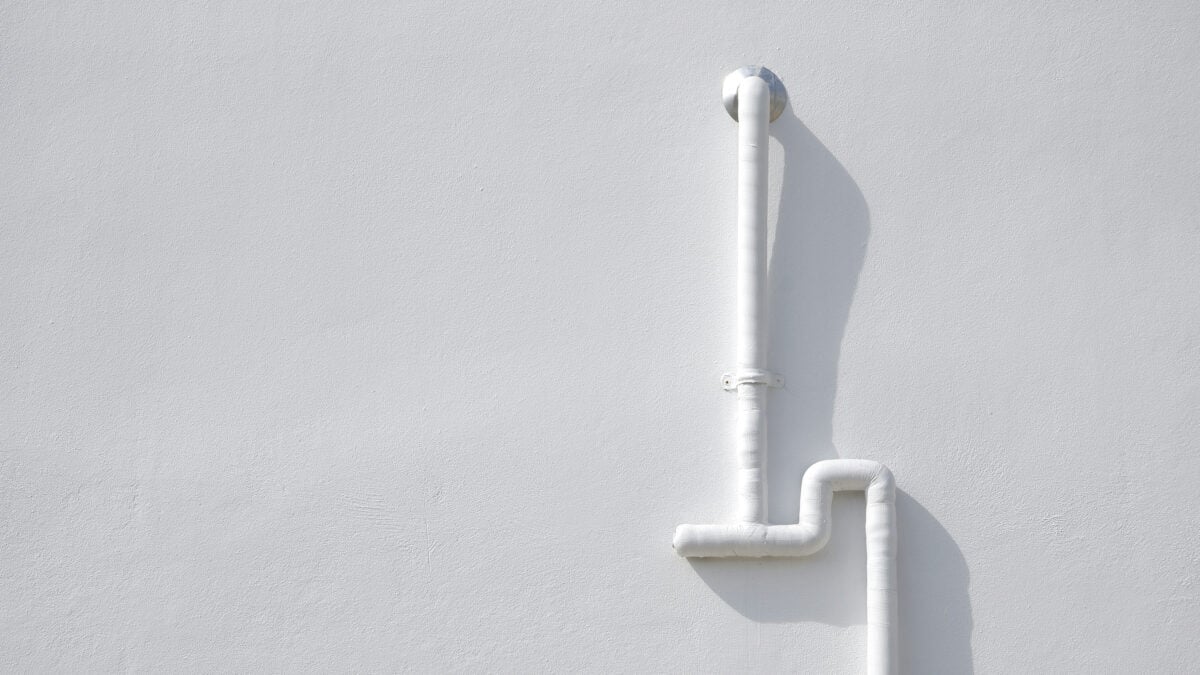
Rather than having the fan and vent pipes installed on the side of the house, the only visible exterior component is the vent stack rising through the roof, similar to an existing plumbing stack.

Radon fans are better protected from the elements. Radon systems create condensation within the suction and exhaust pipes. In cold environments, this condensation can freeze and affect the life of the radon vent fan. Radon fans inside attic spaces are better protected from the freeze and thaw cycle.

Radon fans and electrical components are out of reach. When installed through the attic space, the radon fan and its electrical components are located within the attic. This location is more inaccessible to children who may turn the fan off or play with the system components.

Quieter radon systems. Although radon systems installed through the exterior are quiet, installing the fan inside attic space can prevent all noticeable system noise.

Benefits Of Radon Mitigation Systems Installed In The Attic

System performance indication. Most attic installations are routed through the garage. This method allows the installer to place the system performance gauge right in the garage. Every time you enter your garage you can make certain that your radon system is on and pulling the vacuum.

Benefits Of Radon Mitigation Systems Installed In The Attic

Attic radon systems and home resale value

Many people with radon systems are concerned about the effect of the resale value of their home. A radon system installed through the attic is more appealing to potential buyers as it is not a noticeable component on the outside of the house.

Benefits Of Radon Mitigation Systems Installed In The Attic

Reduced radon re-entry

Having the vent stack opening above the roof of the house makes it possible for the radon contractor to get the radon system exhaust further away from doors, windows and other openings. This will minimize the possibility of radon re-entry into the home.

What to do if a mitigation system cannot be installed in the attic

Radon mitigation systems installed on the exterior of the home are effective and have stood the test of time and will prevent the flow of radon gas. If your home does not have a location available to install the system through the attic, an exterior radon system will effectively reduce radon gas levels.


When choosing the type of radon mitigation system for your house, there are benefits to installing the mitigation system through the attic space. Learn more about our mitigation services

Frequently Asked Questions

Yes. Building code requires the radon fan to sit in an unconditioned space such as a ventilated attic, garage, or outside, never in a living area. Installing the fan in the attic keeps it hidden while still drawing radon from beneath the home and venting it safely above the roofline.

Yes. An attic radon mitigation system reduces radon just as effectively as an exterior system. Both use a fan to create suction beneath the foundation and vent radon above the roof. The main differences are appearance, noise, and equipment protection, not how well the system lowers your radon level.

In an attic installation, the fan and most of the vent pipe run through the interior of the home, often up through the garage and into the attic. The only visible exterior component is the vent stack rising through the roof, similar to a plumbing stack.

They can be. Radon fans are generally quiet, but placing the fan inside the attic adds a layer of separation and insulation that further reduces any noticeable noise. The attic also protects the fan from weather and freezing condensation, which can extend the life of the equipment.

An attic radon system can be more appealing to buyers because the fan and pipes are hidden, leaving only a discreet vent stack on the roof. A tidy, well-placed system signals a well-maintained home and avoids the visible exterior piping some buyers see as a drawback.

Get a Free Estimate!

Request service to get a free quote on your radon mitigation system installation – and ask us about our options for installing your system in the attic!

Categories
Blog

8 Home Health Hazards: Healthy Homes Month 2026 Guide

Quick Answer

Home health hazards are environmental conditions in residential buildings that can cause illness or injury. The U.S. Department of Housing and Urban Development identifies eight primary hazards: radon, mold, carbon monoxide, indoor air pollutants, lead, unsafe drinking water, pests, and household chemicals. Most are invisible, most are testable, and most are treatable once identified.

Why trust this guide

Written by Protect Environmental, a national network of radon and indoor air quality companies operating across 9 U.S. markets through 6 regional legacy brands. Our network includes RAdata, the first licensed radon testing business in New Jersey, and Cliff Cummings Water Services, serving Central Massachusetts for 40+ years. All recommendations follow ANSI/AARST radon measurement and mitigation standards and align with the U.S. Department of Housing and Urban Development’s Healthy Homes framework.

HUD-aligned framework ANSI/AARST standards 9 markets served 40+ years legacy

What the 2026 Illinois Radon Report Card Shows

June is National Healthy Homes Month, a federally-designated awareness campaign run by the U.S. Department of Housing and Urban Development. The point of the month is simple: most American homes contain hidden health hazards, and most homeowners never check for them.

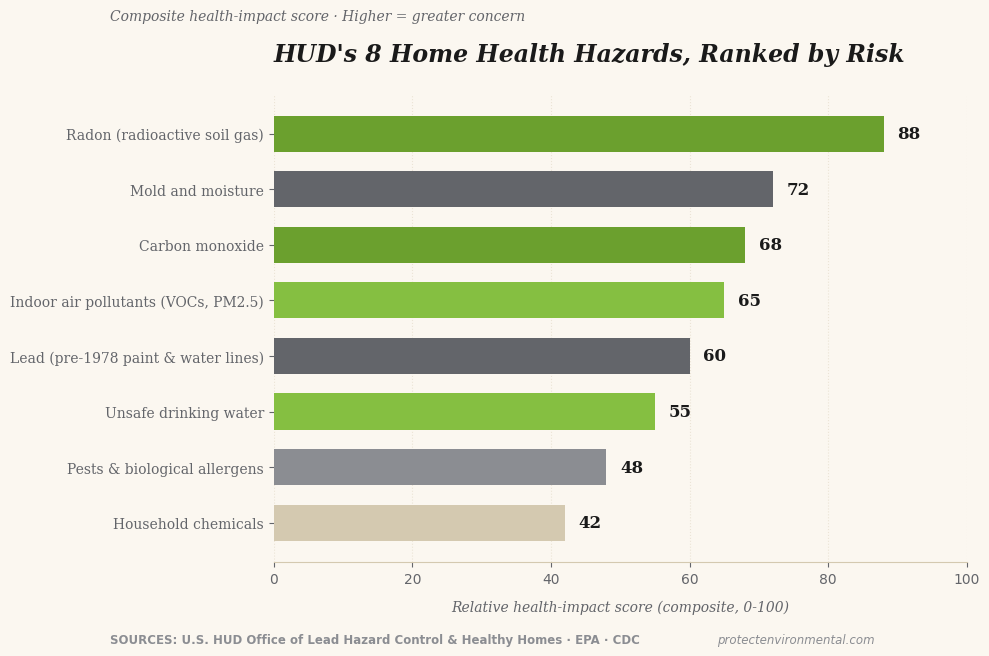
HUD’s Office of Lead Hazard Control and Healthy Homes maintains an official list of the environmental hazards most likely to make families sick at home. The list includes eight primary threats, ranked by health impact, frequency, and severity. Most are invisible. Most are testable. And most are treatable once found.

This guide walks through all eight, in HUD’s order of risk. Some are simple do-it-yourself checks. A few require a certified professional. None of them should be ignored.

What is National Healthy Homes Month?

National Healthy Homes Month is observed every June, established by HUD’s Office of Lead Hazard Control and Healthy Homes. The campaign is supported by the EPA, CDC, and dozens of state and local public-health agencies. The federal Healthy Homes Initiative was launched to address a body of research showing that the home environment is one of the most significant determinants of long-term health, particularly for children, older adults, and people with chronic illness.

HUD assesses American homes against 29 specific housing hazards using its Healthy Homes Rating System. For this guide, we focus on the eight that affect the most U.S. homes and that homeowners can actually do something about.

The 8 home health hazards, ranked by HUD

Ranked by composite health impact. Each section covers what the hazard is, how it affects you, and how to test or check for it.

1. Radon


Radon is a naturally occurring radioactive gas that rises from soil into homes through foundations, cracks, and crawl spaces. It is the second leading cause of lung cancer in the United States and the leading cause among non-smokers. The EPA estimates radon kills 21,000 Americans every year. About 1 in 15 U.S. homes has elevated levels. Check the EPA radon zone map for your county’s baseline risk.

How to check: every home should be tested. Short-term test kits (3-7 days) are widely available, simple to use, and the EPA’s Citizen’s Guide to Radon walks through the protocol. For a certified, lab-grade reading, hire a licensed radon professional.

2. Mold and moisture


Mold grows wherever moisture lingers. Common sources include leaky roofs, plumbing problems, condensation, flooding, and high indoor humidity. Mold spores are a major asthma and allergy trigger, and certain species produce mycotoxins that cause more serious respiratory illness.

How to check: visual inspection of basements, bathrooms, under sinks, around windows, and behind appliances. Watch for musty odors, water stains, peeling paint, or visible growth. Keep indoor humidity between 30-50%. For suspected hidden mold or post-flood remediation, hire a certified inspector.

3. Carbon monoxide


Carbon monoxide is colorless, odorless, and lethal at high concentrations. Typical sources include malfunctioning gas furnaces, water heaters, fireplaces, generators, and attached garages. According to the CDC, around 400 Americans die from CO poisoning each year, mostly from preventable home incidents. Thousands more visit emergency rooms with non-fatal exposure.

How to check: install battery-powered CO detectors on every floor and outside every sleeping area (required by code in most U.S. states). Have all fuel-burning appliances inspected annually by a qualified technician. Never run a generator or vehicle inside an attached garage.

4. Indoor air pollutants (VOCs and particulate matter)


Beyond radon, indoor air contains a mix of volatile organic compounds (VOCs) from paint, furniture, cleaning products, and air fresheners, plus particulate matter (PM2.5) from cooking, candles, fireplaces, and infiltrating outdoor air. The EPA reports indoor air is typically 2-5 times more polluted than outdoor air.

How to check: a consumer-grade air quality monitor gives you real-time readings on PM2.5, VOCs, CO2, and humidity. For a comprehensive professional assessment, hire a certified indoor air quality specialist.

5. Lead (paint and water lines)


Lead is most commonly found in paint applied before 1978 (when residential lead paint was banned) and in older municipal water service lines. Lead exposure is particularly dangerous for children, where even small amounts can cause irreversible neurological damage and developmental delays, per the CDC.

How to check: if your home was built before 1978, assume lead-based paint is present unless tested otherwise. DIY swab tests are available, but for renovations, removal, or sales disclosures, hire an EPA-certified lead-based paint inspector. For water, your municipal utility can confirm whether your home is connected via a lead service line; the EPA’s Lead in Drinking Water resource explains testing and remediation options.

6. Unsafe drinking water


U.S. municipal water systems are regulated under the Safe Drinking Water Act, but contamination can still occur at the household level through aging pipes, well-water sources, or recent infrastructure failures. Common contaminants include lead, bacteria, nitrates, arsenic, and PFAS (per- and polyfluoroalkyl substances) — the so-called “forever chemicals” the EPA has linked to multiple cancers and immune dysfunction.

How to check: request your utility’s most recent Consumer Confidence Report (free, mailed annually). For private wells, the EPA recommends annual testing for bacteria, nitrates, and pH at minimum. Comprehensive water-quality testing by a certified lab is the most reliable approach, especially for newer concerns like PFAS.

7. Pests and biological allergens


Pests include rodents, cockroaches, dust mites, and bed bugs. Beyond the direct disease risk (rodents carry hantavirus, salmonella, and other pathogens), pest droppings are a major asthma and allergy trigger, particularly in children. Cockroach allergens are among the strongest predictors of childhood asthma development.

How to check: visual inspection of kitchens, basements, attics, and behind appliances. Look for droppings, gnaw marks, nests, shed exoskeletons, or live insects. Seal cracks and gaps. Eliminate standing water and accessible food. For serious infestations, the EPA recommends integrated pest management (IPM) rather than blanket pesticide use, which introduces its own indoor air quality issues.

8. Household chemicals


Cleaning products, pesticides, solvents, paint, and aerosols all release chemicals into indoor air during use and (slowly) during storage. Common hazardous components include ammonia, bleach, formaldehyde, chlorinated solvents, and pesticide residues. Mixing certain products (notably bleach and ammonia) produces toxic gases that can cause acute respiratory injury.

How to check: audit storage areas. Move solvents, paints, pesticides, and pool chemicals out of the living envelope, a detached garage or outdoor shed, never the basement. Choose low-VOC alternatives when restocking. The EPA’s safer choice program maintains a list of certified safer cleaning products. Ventilate aggressively when using any chemical product, and never combine cleaning agents.

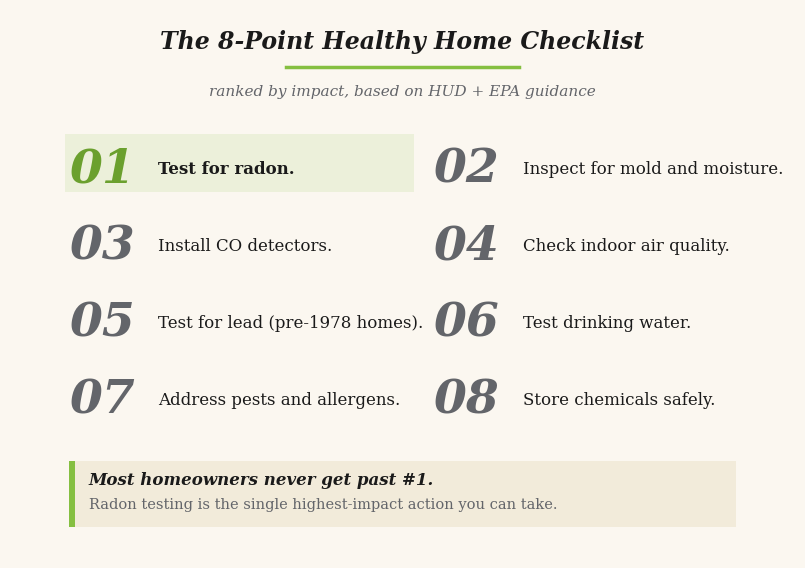
The 8-point healthy home checklist

In order of impact, here is what every homeowner should check this June. The order matters: action #1 affects more homes and causes more harm than any other item on the list.

01. Test for radon

Single highest-impact action. Every home should be tested, regardless of state, age, or foundation type. If your level is above 4.0 pCi/L, mitigate.


02. Inspect for mold and moisture

Visual check of basements, bathrooms, attics, and around plumbing. Address any source of moisture immediately. Maintain 30-50% indoor humidity.


03. Install CO detectors

On every floor, near every sleeping area. Replace batteries annually. Replace the units every 5-7 years (they expire). Service fuel-burning appliances yearly.


04. Check indoor air quality

Consumer monitor for ongoing awareness. Professional testing if anyone in the home has chronic respiratory issues, after a renovation, or before a real-estate transaction.


05. Test for lead (if your home was built before 1978)

Lead-based paint, pre-1986 plumbing, and pre-1990 service lines are the three main exposure routes. Test before any renovation that disturbs paint.


06. Test your drinking water

Request your utility’s Consumer Confidence Report. Run additional testing if your home has a private well, you have young children, or you live in an area with known PFAS contamination.


07. Address pests and biological allergens

Seal entry points. Eliminate food and water sources. Use integrated pest management instead of broad-spectrum pesticides. Clean dust regularly with a HEPA vacuum.


08. Store chemicals safely

Move solvents, paints, pesticides, and pool chemicals outside the living envelope. Switch to low-VOC or third-party-certified safer alternatives. Ventilate during and after use. Never combine products.

A note from Protect Environmental

Five of the eight hazards on HUD’s list fall within what we do. Radon, mold, carbon monoxide, indoor air quality, and drinking water. Radon is where we focus most. It causes more long-term harm than any other home environmental risk, and it’s also the one most homeowners never get around to checking.

Our regional teams handle every part of the process. Testing. System design when mitigation is needed. Installation. Post-install verification. Yearly maintenance to keep the system working. All of it happens across the country, in homes like yours.

If you want to use Healthy Homes Month to find out what’s actually in your air, your water, and your home, we’ll come take a look. No cost. No commitment. Just an answer.

Get my free quote →

Find Your Local Office

What's Your Radon Risk?

Enter your zip code to learn about the radon levels near you.

what's your radon risk?

0% APR

FOR 24 MONTHS

Finance Your Radon Mitigation Installation

Offer Ends: 2/29/24

USE CODE: LoveYourLungs